
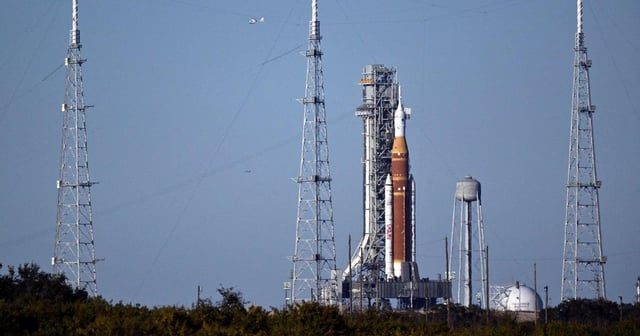
NASA has announced a significant overhaul of its Artemis moon program, emphasizing a return to foundational principles to ensure the success of America's lunar exploration efforts. This shift in strategy reflects the agency's commitment to addressing previous challenges while aiming for sustainable human presence on the Moon.
Reassessing the Artemis Vision
During a press briefing, NASA Administrator Bill Nelson articulated the agency's renewed focus on the Artemis program, stating, "We've got to get back to basics." This statement comes in the wake of several delays and budget overruns that have plagued the initiative, which aims to land the first woman and the next man on the Moon by 2024. Nelson acknowledged that the program had strayed from its original goals, necessitating a comprehensive reassessment. Originally reported by r/space.
The Artemis program was initially launched with ambitious timelines and objectives, seeking to establish a sustainable human presence on the Moon by the end of this decade. However, technical challenges and funding constraints have pushed back deadlines. By refocusing on the core elements of lunar exploration, NASA aims to streamline operations and enhance the program's credibility.
Budget Constraints and Financial Revisions
Financial realities are central to the overhaul. NASA is reportedly facing a budget of approximately $93 billion for the Artemis program through 2025, a figure that reflects both the extensive planning involved and the associated risks of space exploration. The agency is reevaluating how funds are allocated, ensuring that resources are directed toward projects that align with its revised priorities.
Additionally, the Artemis program will see its budget scrutinized more closely to avoid further cost overruns. The Space Launch System (SLS), designed to be the backbone of the program, has faced numerous delays and increased costs, raising concerns about its viability. As part of the restructuring, NASA plans to enhance collaboration with private sector partners to mitigate financial risks and improve efficiency.
New Leadership and Strategic Partnerships
In conjunction with the budgetary changes, NASA is also implementing a leadership shakeup within the Artemis program. Key positions are being filled with individuals who possess extensive experience in space exploration and project management. This move underscores the agency's recognition of the need for strong leadership to navigate the complexities of lunar missions.
Moreover, NASA is strengthening its partnerships with commercial space companies. By leveraging the expertise and innovation of private enterprises, the agency hopes to accelerate its timelines and reduce costs. These collaborations are expected to play a crucial role in developing lunar landers and other technologies essential for Artemis missions. The renewed emphasis on teamwork with private partners marks a significant shift in how NASA approaches its lunar exploration strategy.
Looking Ahead: Future Missions and Goals
The immediate focus of the Artemis program will be on the Artemis II mission, which is slated for 2024. This mission aims to send astronauts on a flyby around the Moon, serving as a precursor to future lunar landings. Following that, Artemis III is targeted for 2025, aiming to make the long-awaited lunar landing, which will include the first woman and the next man on the lunar surface.
The overarching goal of the Artemis program remains to establish a sustainable human presence on the Moon by 2028, paving the way for future exploration of Mars. NASA's commitment to returning to the Moon has been framed as an essential step toward deeper space exploration, with the Moon serving as a critical testing ground for technologies and systems that will be utilized in Martian missions.
As NASA works to implement these changes, the agency remains optimistic about the future of the Artemis program. The adjustments made now are seen as foundational steps toward ensuring the success of America's lunar ambitions. By recalibrating its focus and engaging in strategic partnerships, NASA aims to fulfill its promise of lunar exploration while inspiring a new generation of scientists and engineers.
Originally reported by r/space. View original.