
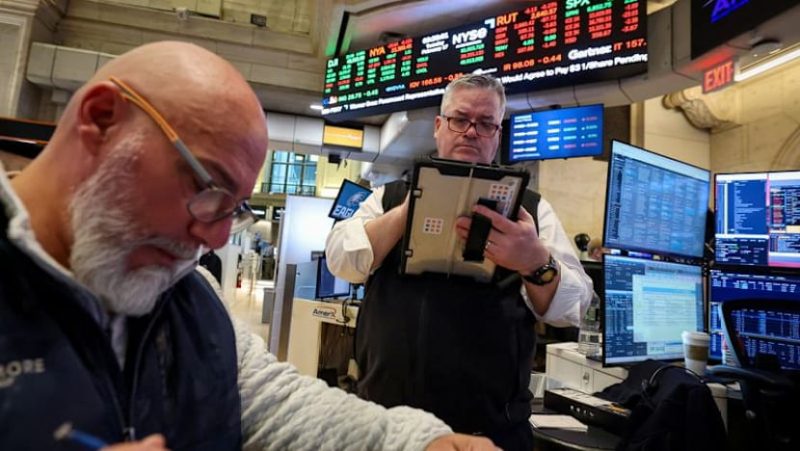
U.S. stocks faced a downturn on February 17, 2026, as investors grappled with uncertainties surrounding the artificial intelligence (AI) boom and positive developments in nuclear negotiations between the United States and Iran. The three major stock indexes, which initially showed signs of recovery, reversed their gains, reflecting investor anxiety over the long-term implications of AI on the workforce.
Market Reaction to AI Investment Fears
Wall Street's volatility was palpable as the Dow Jones Industrial Average dipped by 32.26 points, or 0.07 percent, closing at 49,533.19. Meanwhile, the S&P 500 rose slightly by 7.05 points, or 0.10 percent, ending at 6,843.22, and the Nasdaq Composite managed a modest gain of 31.71 points, or 0.14 percent, to close at 22,578.38. Despite these nominal increases, the overarching mood remained cautious as the tech sector continues to experience turbulence.
Concerns have escalated regarding the potential over-investment in AI technologies and the disruptive impact these innovations may have on employment across various industries. Peter Tuz, president of Chase Investment Counsel in Charlottesville, Virginia, emphasized that "the conversation about AI rose to the top of market concerns about two weeks ago," highlighting the valid fears that AI could result in decreased demand for certain job types. This anxiety has significantly affected market sentiment, contributing to the recent selloff in tech stocks.
Gold Prices Decline Amid Strengthening Dollar
As stock markets grappled with uncertainty, gold prices also experienced a downturn, sliding to a one-week low. Investors often turn to gold as a safe haven in times of market volatility, but with the dollar gaining strength, the allure of gold diminished. According to analysts, the dynamics between currency strength and commodity prices are critical in determining gold's market performance. The interplay between the dollar's appreciation and the decline in gold prices underscores the challenges facing investors amid fluctuating economic conditions.
Federal Reserve Governor Michael Barr noted that AI could lead to "serious short-term disruptions in the labor market," even if the long-term societal benefits might be substantial. This commentary adds another layer of complexity to the financial landscape, as investors weigh the ramifications of AI against the backdrop of inflation and monetary policy. San Francisco Fed President Mary Daly reiterated the necessity of controlling inflation, pointing out that a slightly restrictive monetary stance is vital for achieving that goal.
Progress in US-Iran Nuclear Talks
Amid the financial market fluctuations, diplomatic discussions between the United States and Iran progressed, offering a glimmer of hope for resolution in their long-standing nuclear dispute. Abbas Araqchi, Iran's foreign minister, announced that the two nations have reached an understanding regarding the "guiding principles" for future negotiations. This development, while not indicative of an imminent deal, is seen as a positive step forward.
Peter Tuz characterized the situation as "an optimistic starting point," underscoring the importance of dialogue. The fact that both parties are engaging without escalating tensions is viewed favorably by investors who are keenly aware of the geopolitical implications of such negotiations. The potential for a diplomatic breakthrough adds an element of unpredictability to the markets, especially as investors consider how these talks could influence oil prices and global economic stability.
Looking Ahead: Market Sentiment and Economic Indicators
The sentiment in the market remains fragile as investors navigate through concerns over AI, fluctuating stock prices, and geopolitical developments. The upcoming weeks could prove critical as economic indicators, including inflation rates and employment data, will likely play significant roles in shaping market dynamics. Investors will be closely monitoring the Federal Reserve's response to these economic conditions, particularly as discussions about potential interest rate adjustments continue.
With the uncertainty surrounding AI and its impact on the labor market, along with the ongoing diplomatic efforts with Iran, market participants are poised for potential turbulence. As the global economic landscape evolves, the interplay of technology, regulation, and international relations will continue to influence investor behavior and market stability.