
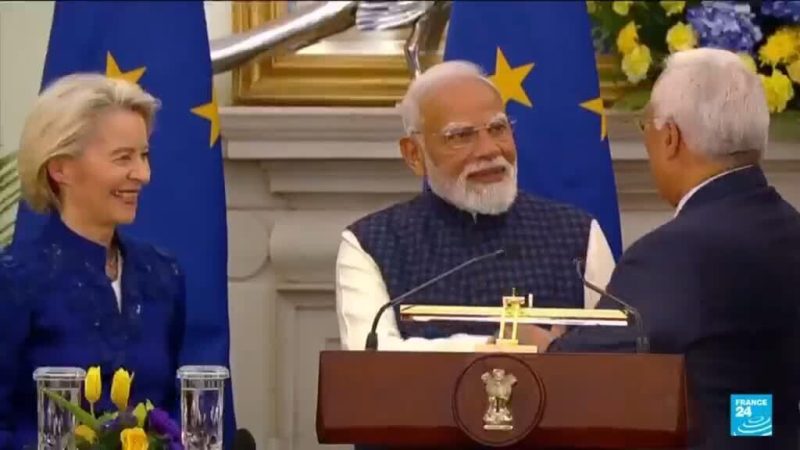
India's Prime Minister Narendra Modi has transformed the nation into a diplomatic swing power, skillfully navigating relationships with global leaders such as Vladimir Putin and Donald Trump while actively engaging with European nations and promoting the interests of the Global South. This multifaceted approach has not only enhanced India's international influence but also drawn increasing scrutiny from the United States, particularly regarding its ongoing trade with Russia amid the Ukraine conflict.
Multi-Alignment Strategy: A New Era for Indian Diplomacy
Since taking office in 2014, Modi has adopted a 'multi-alignment' strategy, allowing India to maintain relationships with diverse global powers while championing its national interests. This approach is evident in India's refusal to outright condemn Russia for its invasion of Ukraine, a decision that contrasts sharply with the stance taken by many Western nations. Instead, India continues to purchase Russian oil, capitalizing on discounted prices that have become available due to international sanctions. As of October 2023, India has imported approximately 1.2 million barrels of Russian crude oil per day, accounting for nearly 25% of its total oil imports.
This diplomatic balancing act has positioned India as a key player in global geopolitics, allowing it to engage with the likes of Putin and Trump while also appealing to European leaders. Modi's government has emphasized its commitment to the Global South, seeking to amplify the voices of developing nations in international forums and negotiations.
Strengthening Ties with Russia Amid Global Tensions
India's relationship with Russia has deep historical roots, dating back to the Cold War. Despite the ongoing conflict in Ukraine, Modi's administration has opted to prioritize this longstanding partnership. The strategic importance of Russia for India is underscored by defense ties, with Moscow being a major supplier of military equipment. In 2021 alone, India imported defense equipment worth approximately $1.5 billion from Russia, solidifying its reliance on Russian technology.
Moreover, Russia's role as a key energy supplier has become increasingly significant. The Indian government has capitalized on the opportunity to procure Russian oil at reduced rates, with prices hovering around $70 per barrel, significantly lower than the global average of around $90 per barrel during the same period. This economic advantage has provided India with essential energy security while allowing Moscow to sustain its oil revenues despite sanctions.
Engaging with the West: A Delicate Balancing Act
While Modi's administration has fortified its ties with Russia, it has equally sought to cultivate relationships with Western powers, particularly the United States. The Biden administration has expressed concern over India's continued oil imports from Russia, urging New Delhi to reconsider its stance. However, India remains undeterred, citing its energy needs and the importance of maintaining strategic autonomy in its foreign policy.
During Modi's recent visits to Washington, discussions have centered around enhancing economic cooperation and addressing shared security challenges, particularly in the Indo-Pacific region. The U.S. sees India as a crucial partner in countering China's growing influence, and Modi's government has embraced this narrative, participating in joint military exercises and technology partnerships.
Yet, the pressure from Washington is palpable. U.S. officials have warned that India's continued engagement with Russia could jeopardize its access to advanced military technologies and trade benefits. As Modi navigates these complex waters, the challenge lies in sustaining India's economic and security interests while responding to external pressures.
Championing the Global South: India's Vision for the Future
Modi's foreign policy vision extends beyond traditional power dynamics, placing significant emphasis on the Global South. He has positioned India as a leader advocating for the interests of developing nations, calling for a more equitable global order. This vision was highlighted during the recent G20 summit in New Delhi, where Modi championed initiatives aimed at addressing climate change, food security, and digital inclusion.
India's efforts to strengthen ties with African countries and other emerging economies reflect its commitment to fostering partnerships that prioritize mutual growth. By advocating for inclusive development, Modi aims to enhance India's standing as a voice for the Global South in international forums.
In this multi-faceted diplomatic landscape, India's strategic positioning under Modi's leadership illustrates a significant shift in its foreign policy. As the nation balances relationships with Russia, the U.S., and Europe, it seeks to assert its influence while promoting the interests of developing nations.
Looking ahead, India's diplomatic strategy will continue to evolve as it navigates the complexities of an increasingly polarized world. Balancing its relationships with major powers while championing the Global South will be pivotal in enhancing India's global clout in the years to come.