
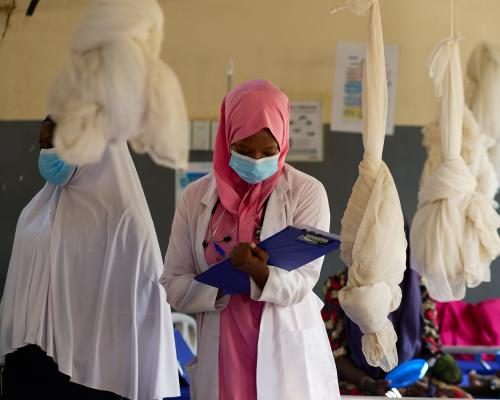
In the Kaita community of Nigeria's northern Katsina state, a healthcare facility is overwhelmed as malnutrition among children surges. Zuwaira Hanafi, a mother of eight-month-old Hambali, stood in shock as doctors rushed past her to treat her semiconscious daughter. This scene is emblematic of a hunger crisis gripping Nigeria, with the Red Cross warning that up to 33 million Nigerians could face severe food shortages this year.
Alarming Malnutrition Rates Among Children
Hambali is among the millions of Nigerian children suffering from acute malnutrition, a condition that currently afflicts an estimated 6.4 million kids across the country. The situation is particularly dire in the northern regions, where ongoing violence and economic instability exacerbate food insecurity. Medical personnel at the Kaita facility are employing color-coded tape to measure children's arm diameters, a quick and effective way to assess malnutrition levels. The facility, operated by the Alliance for International Medical Action (Alima) in partnership with local officials, has become a critical resource for affected families. Originally reported by The Guardian.
Dr. Soma Bahonan, head of Alima's Nigeria mission, noted that the number of mothers seeking treatment for malnutrition is rising alarmingly. Many of these women are young, with some as young as 15 years old, reflecting a troubling trend of youth facing severe health challenges. The facility, which has 80 beds and was established in 2021, treated over 36,000 children last year alone, demonstrating its vital role in combating malnutrition in the region.
Complex Challenges of Food Insecurity
Nigeria's hunger crisis is driven by multiple factors, including climate shocks, poor governance, and rising violence from jihadists and other non-state actors. These issues prevent access to essential services and contribute to a deteriorating healthcare environment. In Katsina state, the doctor-to-patient ratio stands at approximately 1:9,000, drastically lower than the World Health Organization's recommended standard of 1:600. Furthermore, many healthcare workers are leaving the country due to delayed payments and inadequate salaries.
Joachim MacEbong, a senior analyst at Control Risks, Described Nigeria's situation as a "polycrisis," where economic challenges, security issues, and human development crises feed into one another. Even with the successes seen at the Kaita facility, Dr. Bahonan expressed concern over the broader implications of the ongoing crisis. The upcoming lean season, from June to September, heightens the risks for vulnerable populations, leading to increased malnutrition cases and healthcare demands.
Innovative Solutions and Continuing Efforts
Efforts to combat malnutrition are underway, with the Nigerian government, in collaboration with the World Bank, launching the Accelerating Nutrition Results in Nigeria project to provide basic nutrition packages to millions of vulnerable households. The second phase of this initiative is currently being implemented, yet experts assert that more comprehensive strategies are necessary. They emphasize the importance of enhancing food affordability and social protections for vulnerable families, alongside ongoing investment in maternal nutrition.
Supply chain issues further complicate the crisis. Peter Bunor Jr., cofounder of Field Intelligence, pointed out that inadequate availability of essential drugs and medical supplies leaves many families in desperate situations. For many, the journey to obtain necessary medications often results in empty-handed trips due to stock shortages, exacerbated by the hunger crisis that weakens immune systems and increases the demand for treatments.
Hope Amidst Despair
Despite the overwhelming challenges, there is hope for improvement in Nigeria's healthcare landscape. In 2018, the Nigeria Health Logistics Management Information System was launched to better manage pharmaceutical supply chains for public health initiatives. This system has attracted participation from organizations like UNICEF and is now managed by the health ministry, aiming to predict and resolve shortages before they escalate into crises.
Aid workers maintain optimism that the health sector will adapt and evolve to meet the growing needs of the population. The dedication of medical personnel and community organizations continues to shine through the dark shadows of the hunger crisis. However, without sustained effort and resources, the battle against malnutrition and hunger in Nigeria will remain a formidable challenge.
Originally reported by The Guardian. View original.