
As Middle Eastern tensions escalate, French President Emmanuel Macron highlighted Europe's reliability during a visit to Japan, indirectly criticizing former U.S. President Donald Trump. Meanwhile, Trump claimed that U.S. military operations in Iran could end within weeks, stirring debates about NATO and America's role in global security.
Macron's Remarks on European Predictability
During a visit to Tokyo, French President Emmanuel Macron emphasized Europe's stability, stating, "Predictability has value, and we have demonstrated that over all these past years." He contrasted this with nations that may act unpredictably, hinting at the current U.S. administration's approach to foreign policy under Trump. Macron acknowledged that while Europe might be perceived as slower in response, it has consistently offered a reliable stance on international matters. "You don't know whether the day after tomorrow they will still be in that position," he remarked, illustrating the risks of aligning with unpredictable allies. Originally reported by The Guardian.
This commentary comes on the heels of rising tensions due to the ongoing conflict involving the U.S. and Israel's military actions against Iran, which have significant implications for global energy security, particularly for nations like Japan that rely on the Strait of Hormuz for oil imports. Macron's emphasis on predictability is a call for a more stable and calculated approach to international relations, especially in light of recent military escalations.
Trump's Predictions on U.S. Military Operations
Amidst the backdrop of these geopolitical tensions, Donald Trump declared on Tuesday that U.S. military operations in Iran would conclude in a matter of weeks. He suggested a timeline of "two to three weeks," asserting that it would ultimately be up to the countries dependent on the Strait of Hormuz to ensure its security. "That's not for us.. That'll be for whoever's using the strait," he stated, shifting responsibility onto other nations.
Trump's comments reflect a broader strategy of disengagement from prolonged military involvement, echoing sentiments from a recent Reuters/Ipsos poll where two-thirds of Americans expressed a desire for a swift end to U.S. involvement in the Iran conflict, even if it means not achieving the administration's objectives. This sentiment may influence future U.S. foreign policy decisions as the conflict unfolds.
Israel's Military Actions and Regional Consequences
The situation escalated further as Israel's military reported a wave of airstrikes on Tehran, claiming to have intercepted missiles launched from Iran. Warning sirens blared across central Israel, underscoring the immediate threat posed by Iran's military capabilities. An Israeli military statement confirmed that their defenses were actively engaged in intercepting the missile threats.
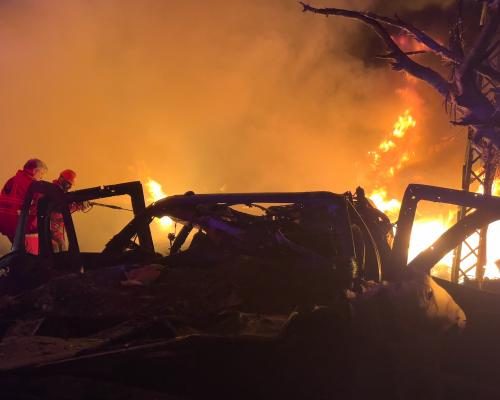
Tragically, the regional conflict has already resulted in casualties, with one individual killed in the United Arab Emirates after debris from an intercepted drone fell on a farm. Additionally, a tanker off the coast of Qatar was struck by Projectiles, causing a fire and damage, though no injuries to the crew were reported. The UK Maritime Trade Operations issued alerts regarding these incidents, highlighting the ongoing risks to maritime trade routes crucial for energy supplies.
Economic Ramifications and Government Responses
As the conflict continues, its economic ramifications are being felt globally. In Australia, Treasurer Jim Chalmers announced new support measures for businesses grappling with rising fuel prices attributed to the war. The government is introducing more lenient tax payment plans and deferring tax obligations for companies affected by the crisis.
Chalmers noted, "The war in the Middle East is having an extreme impact on the global economy. Australians and Australian small businesses are paying the price for that." Prime Minister Anthony Albanese is set to address the nation, urging Australians to conserve fuel as part of a broader strategy to address the economic fallout from the conflict.
As tensions in the Middle East escalate, the international community watches closely, aware that decisions made in the coming weeks could reshape geopolitical alliances and economic landscapes. The evolving dynamics between the U.S., Israel, Iran, and European nations like France will likely play a critical role in determining the future of peace and stability in the region.
Originally reported by The Guardian. View original.