
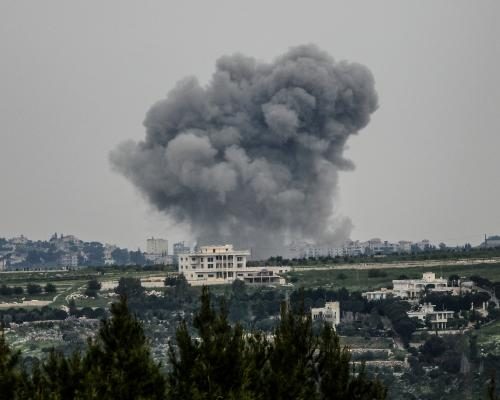
In a tragic escalation of violence, Lebanon's health ministry reported that Israeli airstrikes in southern Lebanon claimed the lives of 14 people on Sunday, marking the deadliest day since a ceasefire between Israel and Hezbollah was established less than two weeks ago. Among the deceased were two women and two children, with an additional 37 individuals sustaining injuries. The Israeli military confirmed that one of its soldiers was also killed in the ongoing conflict.
Ceasefire Under Strain
The U.S.-mediated ceasefire, which began on April 16, had been extended to mid-May, resulting in a notable reduction in hostilities. However, the fragile peace has been repeatedly tested, as both sides have accused each other of violating the terms of the agreement. "Hezbollah's violations are, in practice, dismantling the ceasefire," Israeli Prime Minister Benjamin Netanyahu stated during a cabinet meeting on Sunday. He emphasized that Israel is responding vigorously according to the rules set in collaboration with the United States and Lebanon. Originally reported by The Guardian.
Despite the ceasefire, Hezbollah has maintained its stance, asserting that it will not halt attacks on Israeli forces inside Lebanon or on Israeli towns, citing ongoing ceasefire violations by Israel. The Iranian-backed group announced that it would not rely on ineffective diplomatic efforts or the Lebanese authorities that it believes have failed to protect the nation.
Military Operations Intensify
Israeli military operations have continued within a designated "yellow line"-a buffer zone approximately 10 kilometers deep along the Lebanese border. Residents in this area have been warned not to return, and the Israeli military reiterated these warnings on Sunday, advising civilians to evacuate seven towns beyond this zone. A spokesperson for the Israeli military accused Hezbollah of breaching the ceasefire, asserting that Israel would take necessary action against these violations.
On Sunday, the Israeli military reported strikes targeting Hezbollah fighters, rocket launchers, and a weapons depot. The Lebanese state-run National News Agency (NNA) indicated that Israeli airstrikes occurred in multiple southern locations, including areas already under evacuation warnings as well as other regions. Earlier in the day, Hezbollah claimed to have engaged Israeli troops within Lebanon and attacked the rescue team sent to evacuate them. This resulted in the death of an Israeli soldier and injuries to six others.
Ongoing Humanitarian Crisis
The violence has contributed to a deepening humanitarian crisis in Lebanon. According to the Lebanese health ministry, since the conflict reignited on March 2, more than 2,500 individuals have been killed due to Israeli strikes. The casualties include 277 women, 177 children, and 100 medical personnel. The ministry does not differentiate between militants and civilians in its casualty reports, while Hezbollah has refrained from providing an aggregate number of its fighters who have died in the conflict. In recent days, the group has conducted multiple group funerals for its fallen fighters.
In Israel, the toll from Hezbollah's attacks has been significant as well. The group has been responsible for the deaths of two civilians, while Israel claims that 16 of its soldiers have died since the onset of hostilities on March 2. The latest developments underscore the volatile situation as both nations remain ensnared in a cycle of violence.
International Responses and Future Implications
The international community watches with concern as the situation escalates. Both Israel and Hezbollah appear entrenched in their positions, with little indication that diplomatic efforts will yield a resolution. As the ceasefire continues to fray, the risk of further military escalation looms large, raising alarms over the potential for a broader conflict that could engulf the region.
With more lives lost and a humanitarian crisis worsening, the urgent need for a sustainable solution becomes increasingly apparent. The calls for ceasefire compliance will likely intensify as global leaders seek to mediate and restore peace in the region. However, the deep-seated animosities and ongoing violence present formidable challenges to any diplomatic efforts aimed at reconciliation.
Originally reported by The Guardian. View original.