
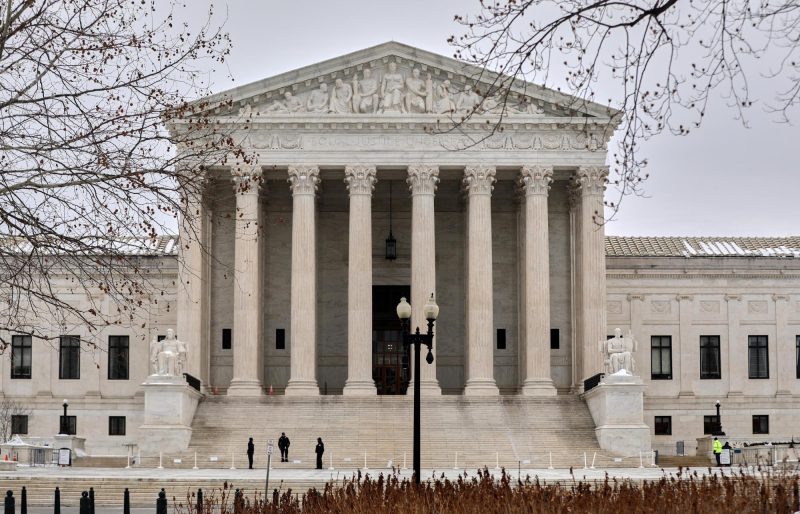
In a significant ruling, the Supreme Court has invalidated President Donald Trump's extensive tariffs on imports from nearly all countries. Despite this setback, Trump insists he has several alternatives at his disposal to maintain his aggressive trade policies. These options, including a potential 10% global tariff, reflect his ongoing commitment to reshaping U.S. trade relations.
Supreme Court Ruling Challenges Trump's Authority
On February 20, 2026, the Supreme Court delivered a decisive blow to Trump's tariff strategy, rejecting his broad claims of authority to impose tariffs unilaterally. The Court found that Trump had overstepped his bounds, particularly under the International Emergency Economic Powers Act (IEEPA) of 1977, which he argued granted him nearly limitless power to impose tariffs. In a fiery response, Trump publicly criticized the justices, labeling them "fools and lapdogs" during a press conference. He insisted that although the ruling was incorrect, he would pursue other avenues to implement tariffs that could impact global trade. Learn more about this topic on Wikipedia.
Alternative Tariff Options on the Table
Despite the Supreme Court's decision, Trump is not backing down. He announced plans to impose a 10% global tariff under a different trade statute, which allows such duties for an initial period of 150 days. After this period, any extensions would require Congressional approval. Additionally, Trump hinted at using various other laws and regulations to impose new tariffs, although many of these would necessitate a legal process before implementation. He also suggested the possibility of using import licenses to restrict certain products but provided few specifics on how this would be executed.
Historical Context of Tariff Powers
The debate surrounding Trump's tariff authority is rooted in a longstanding tension between the executive branch and Congress. The U.S. Constitution specifically grants Congress the power to impose taxes and tariffs, a fact that has been underscored by critics of Trump's unilateral actions. The Trade Act of 1974, particularly Section 301, has historically allowed the U.S. to retaliate against countries it accuses of unfair trade practices. Trump has utilized this statute effectively during his presidency, particularly against China, which has been a focal point of his trade policy since his first term.
The Impact of Tariffs on the U.S. Economy
Since Trump's return to the White House in January 2025, U.S. tariff rates have surged dramatically, from an average of 2.5% to nearly 17% within a year. This represents the highest average tariff rate since 1934, according to data from Yale University's Budget Lab. The tariffs have been framed as a response to America's persistent trade deficits, which Trump has labeled a national emergency. However, economists are divided on the actual impact of these tariffs on the U.S. economy, with some arguing they have hurt consumers and businesses reliant on imported goods.
Regarding trump has other tariff options, As Trump prepares to navigate the aftermath of the Supreme Court ruling, the implications of his tariff strategies will likely reverberate through the U.S. economy and international trade relations. With Congress having a say in any extensions of the proposed global tariff, the political landscape could complicate Trump's ambitions. Nevertheless, his administration appears determined to find ways to tackle what it perceives as unfair trade practices from other nations. The ongoing saga of tariffs under Trump's leadership underscores the complexities of trade policy in an increasingly interconnected global economy. For more information, see Yext Launches $180 Million Dutch Auction Tender Offer - Your Yext Tender Offer Opportunity.