
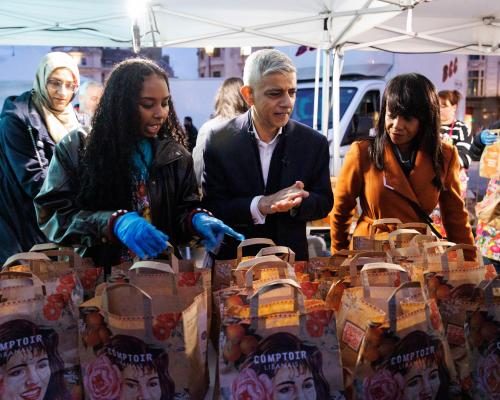
In a bold move, London Mayor Sadiq Khan has urged the Labour Party to commit to rejoining the European Union's customs union and single market within the current parliamentary term. This statement comes as Labour anticipates a challenging electoral landscape following the upcoming Scottish Parliament, Welsh Senedd, and local elections in England slated for May 2024.
Leadership Challenge Looms for Labour
Sharon Graham, the general secretary of Unite, has voiced her concerns regarding Labour leader Keir Starmer's position, suggesting that he may face a Leadership Challenge after the May elections. During an interview on Sky News, Graham indicated that many within the party share her sentiment privately. She stated, "I think after the May elections there will be a move to change leader because I think Labour are going to pretty much be decimated in those elections." This perspective highlights growing dissatisfaction within the party ranks regarding Starmer's leadership and the party's electoral prospects. Originally reported by The Guardian.
Graham's comments come amidst a backdrop of dwindling wage growth, which has sharply slowed in the three months leading to January as reported by the Office for National Statistics. This economic context adds pressure on Labour to respond effectively to the concerns of working-class voters disillusioned with the current government.
Khan's Vision for Labour and the EU
In stark contrast to Starmer's previous assertions that the UK would not rejoin the EU during his lifetime, Khan is advocating for a comprehensive shift in Labour's stance on EU relations. In an interview with La Repubblica, Khan articulated his belief that rejoining the customs union and single market should become a central part of Labour's next election manifesto. He emphasized the detrimental effects of Brexit on London's economy and society, stating, "I see on a daily basis the damage Brexit has done to not just London, but Londoners, the damage economically, socially and culturally."
Khan proposed a five-stage process to re-establish relations with the EU, beginning with resetting ties and moving towards closer alignment on trade matters. He argued that Labour should aim to rejoin the customs union during this parliament, stating, "Any trade agreement is less good than the customs union." Khan also envisions a clear commitment in Labour's manifesto to rejoin the European Union, which he believes would eliminate the need for a second referendum.
Government's Steel Strategy and Economic Challenges
The political landscape is further complicated by ongoing discussions in Parliament regarding the government's steel strategy. Business Secretary Peter Kyle is set to make a statement addressing concerns about the domestic steel industry, particularly in light of plans to double tariffs on Chinese and foreign steel imports. Trade Minister Chris Bryant defended these measures, asserting that the UK needs to ensure fair trade practices to protect its steel industry. Bryant remarked, "It's not very Donald Trump. It's very, very specific. I believe I'm passionate about free trade, but it has to be fair trade."
This strategy to bolster local production amid economic pressures reflects a broader concern within the government about the impact of global competition on British industries. A failure to adequately address these issues could further alienate working-class voters, a demographic that Labour desperately needs to win back.
Future Prospects for Labour and Brexit Policy
As the political climate evolves, Khan's push for a more pro-European stance may resonate with Labour voters, particularly in London, where support for remaining in the EU remains strong. The upcoming elections present a critical moment for the party, especially as they face challenges from the Green party, which has positioned itself as more aligned with pro-EU sentiments.
While the likelihood of Starmer embracing Khan's proposals seems slim, the conversation around Labour's Brexit policy is shifting. Ideas once dismissed may gain traction as the party grapples with its electoral strategy and the pressing needs of its constituents. If Labour can effectively address the concerns raised by its leadership and adapt its policies, it might improve its standing ahead of the 2024 general election.
In this challenging political environment, the interplay between Labour's leadership, its approach to Brexit, and the broader economic landscape will be pivotal in shaping the party's future direction and electoral success.
Originally reported by The Guardian. View original.