
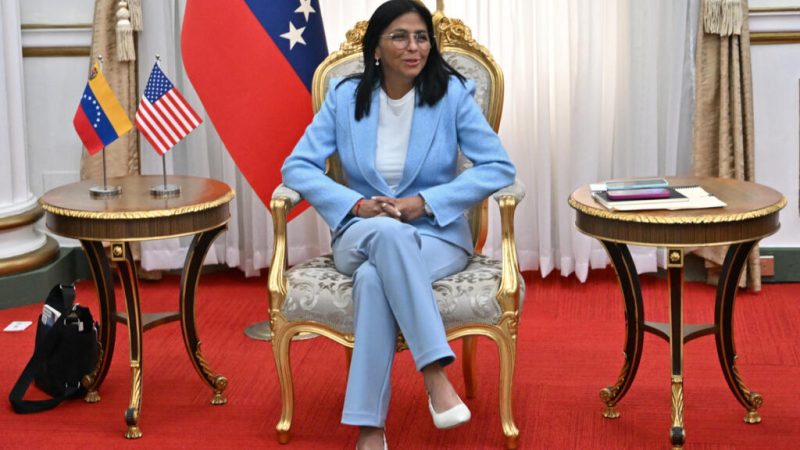
In a surprising turn of events, General Francis Donovan, the top US military commander for Latin America, along with senior Pentagon official Joseph Humire, made an unannounced visit to Venezuela on Wednesday. This trip marks the first engagement of its kind following the capture of Venezuelan President Nicolás Maduro by US forces last month, shifting the landscape of US-Venezuela relations dramatically.
High-Level Security Discussions in Caracas
The purpose of the visit was to hold security talks with interim authorities in Caracas. General Donovan's delegation is seen as a significant step in establishing dialogue between the US and Venezuela, especially after the tumultuous political climate surrounding Maduro's regime. The meeting included discussions on security cooperation and potential pathways to stabilize the region. It's expected that these talks will address not only immediate security needs but also broader concerns regarding drug trafficking and organized crime, which have plagued Venezuela for years.
During his visit, Donovan emphasized the US's commitment to supporting democratic processes in Venezuela. This is particularly important given the tensions that have historically existed between the two nations. The interim authorities, who are navigating the political fallout from Maduro's capture, expressed eagerness to engage with the US military to improve security conditions in the country.
Implications of Maduro's Capture
The recent capture of Nicolás Maduro has sent shockwaves through Venezuela and the wider Latin American region. Maduro's regime had long been a point of contention for the US, which has accused it of human rights violations and corruption. With Maduro now in US custody, the future of Venezuela's political landscape remains uncertain.
Observers note that this pivotal moment could potentially open avenues for a more stable government in Venezuela. However, the transition will require careful navigation to avoid exacerbating existing tensions. The interim authorities now face the challenge of consolidating power while managing the expectations of a population weary from years of economic hardship and political repression.
US-Venezuela Relations at a Crossroads
This unannounced visit underscores a moment of potential reconciliation between the US and Venezuela. Historically, relations have been fraught with hostility, particularly during Maduro's tenure. The US had previously imposed sanctions aimed at crippling Venezuela's economy and pressuring the Maduro government politically.
Now, with a shift in leadership dynamics, there is hope for a new chapter. The talks led by Donovan and Humire may pave the way for future cooperation on various fronts, including humanitarian aid and economic assistance. The international community is watching closely to see how these developments unfold, particularly as countries like Russia and China have also shown interest in Venezuelan affairs.
A New Security Framework for Venezuela?
The discussions during Donovan's visit may lead to the establishment of a new security framework aimed at restoring order and stability in Venezuela. The interim authorities are particularly interested in US assistance in combating drug trafficking and organized crime, which have surged in recent years.
With Venezuela's strategic location and vast resources, the US has a vested interest in ensuring that the country does not become a haven for criminal enterprises. Donovan's delegation likely explored ways to enhance intelligence sharing and joint operations that could help address these pressing issues. The outcome of these talks could redefine how both nations approach security matters in the future.
As the situation in Venezuela continues to evolve, the implications of General Donovan's visit are far-reaching. The potential for improved relations between the US and Venezuela could signify a shift toward a more stable region. However, the path ahead remains complex, and the interim authorities will need to address both internal challenges and external expectations in the coming months. How this newfound dialogue develops will be crucial for the future of Venezuela and its role in Latin America.