
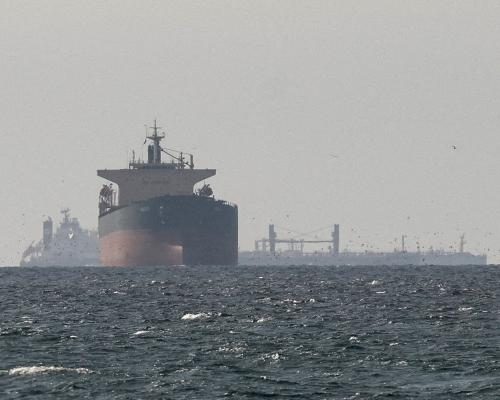
Japan, Australia, and the United Kingdom have collectively decided against sending naval vessels to the Strait of Hormuz, a vital shipping corridor largely blocked to oil tankers by Iran. This decision comes as U.S. President Donald Trump intensifies pressure on allied nations to bolster security in the region. The closure of the strait, which accounts for approximately 20% of the world's oil supply, has precipitated severe disruptions in global energy markets, leading to unprecedented spikes in oil prices.
On Sunday, Trump stated that his administration reached out to seven countries for support, although he refrained from naming them. In earlier comments, he expressed hope that nations including China, France, Japan, and South Korea would contribute to securing the strait. "I'm demanding that these countries come in and protect their own territory because it is their territory," Trump remarked while aboard Air Force One. He emphasized the strait's importance as a critical energy route, urging international cooperation to maintain its security. Originally reported by The Guardian.
Japan's Cautious Stance on Military Involvement
In the wake of rising tensions, Japan's Prime Minister Sanae Takaichi confirmed that the country has no immediate plans to deploy naval forces to the Middle East. "We have not made any decisions whatsoever about dispatching escort ships. We are continuing to examine what Japan can do independently and what can be done within the legal framework," Takaichi stated in parliament. This reluctance is compounded by Japan's pacifist constitution, which strictly limits the deployment of its Self-Defense Forces (SDF) abroad.
Defence Minister Shinjiro Koizumi echoed Takaichi's sentiments, indicating that Japanese warships will not be sent to the strait under the current circumstances. He noted that any military action must be weighed against Japan's legal and political constraints. Takayuki Kobayashi, the policy chief of Takaichi's ruling Liberal Democratic Party, further emphasized that the threshold for Japan's military involvement is "extremely high." With Japan relying on the Middle East for 90% of its oil, the prolonged closure of the strait poses a significant risk to the nation's energy security.
Australia's Firm Rejection of Naval Deployment
Australia has also pushed back against U.S. requests for military support in the region. Transport Minister Catherine King confirmed that the country will not send a vessel to the Strait of Hormuz. "We won't be sending a ship to the strait of Hormuz," she stated. Despite acknowledging the strategic importance of the strait, she mentioned that Australia has not received an official request for assistance.
The Australian opposition, particularly the conservative Coalition, has also expressed caution regarding potential military involvement. Defence shadow minister James Paterson highlighted the necessity of evaluating whether such a deployment is in the nation's best interests and whether the relevant naval vessels are available for such a mission. As tensions continue to escalate, Australia remains firm in its decision not to engage militarily in the strait.
UK's Limited Military Response Considered
The UK government is contemplating sending aerial minesweepers to assist in clearing the strait of mines, a step that could facilitate the resumption of oil exports. However, officials have warned that deploying naval ships, as urged by Trump, might exacerbate an already volatile situation. The UK's approach appears to prioritize regional stability over direct military involvement in the Ongoing Conflict.
Meanwhile, South Korea has stated it will maintain close communication with the U.S. regarding the situation, promising to make a decision after careful review of the circumstances. France has also ruled out sending warships, emphasizing that its current military posture aims to stabilize the region rather than escalate conflicts.
In a recent interview, Trump also mentioned the possibility of delaying a summit with China's Xi Jinping, ramping up pressure on Beijing to take action regarding the strait. He noted that China, which imports 90% of its oil through the strait, should play a role in ensuring its security. The ongoing blockade has already caused significant disruptions in oil supply chains, with global oil prices soaring as a result.
As the situation unfolds, the lack of international military support for the Strait of Hormuz underscores the complex geopolitical landscape in which national interests, legal constraints, and regional stability are at play. The world watches closely as these countries navigate their responses to the critical challenges posed by the ongoing conflict.
Originally reported by The Guardian. View original.