
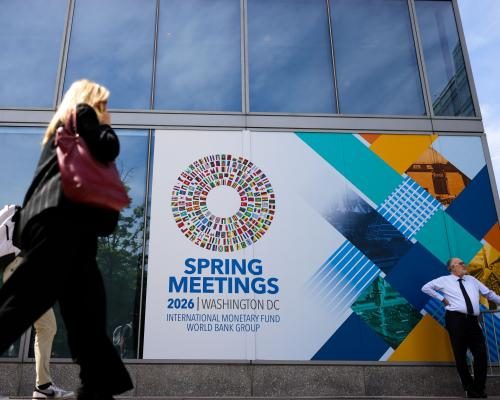
As the International Monetary Fund (IMF) convened in Washington, D.C. this week, the specter of the Iran war loomed large over discussions about global economic stability. With the most severe energy shock since the 1970s and risks of a potential global recession, finance ministers and central bank leaders gathered to confront a reality that has darkened living standards worldwide. Kristalina Georgieva, managing director of the IMF, warned that the conflict was causing panic among several nations, underscoring the urgent need for a resolution.
Chilling Assessments from IMF Leaders
During the meetings, Georgieva addressed a gathering of finance ministers, stating, "The sooner it [the Iran war] ends, the better for everybody." Her remarks resonated in a city already grappling with a record-breaking heatwave, as leaders discussed the ramifications of the ongoing conflict. The rising energy prices, attributed to the war, have hit vulnerable households particularly hard, raising concerns about living standards that had recently shown signs of improvement. Originally reported by The Guardian.
Mohamed El-Erian, former IMF deputy managing director and current chief economic adviser at Allianz, characterized the atmosphere as a "twilight-zone meeting." He highlighted multiple shadows hanging over the discussions, including widespread anxiety about the global economy and specific countries facing dire consequences from the conflict. El-Erian emphasized that while the U.S. initiated the war, it would face less relative impact compared to other nations.
Geopolitical Tensions Resurface
The mood at the IMF was not just focused on financial metrics; it was also steeped in geopolitical tension. At a breakfast meeting of G20 representatives, including former U.S. Treasury Secretary Scott Bessent and outgoing Federal Reserve Chair Jerome Powell, the atmosphere was described as somber. Rachel Reeves, the UK Chancellor, openly criticized the Iran war as a "mistake" during a CNBC conference, expressing the UK's concern over rising energy prices affecting families and businesses.
Reeves' remarks came just before her one-on-one meeting with Bessent, where she aimed to emphasize the economic pain felt in the UK due to the conflict. Observers noted the increasing vocalization of her dissent, especially given the shared interests between the U.S. and the UK in areas like AI and financial services. Nonetheless, the Chancellor's candidness hinted at a willingness to confront the U.S. over its foreign policy decisions.
Global Cooperation at a Crossroads
Before the Iran war reshaped the agenda, the IMF meetings were set to address global cooperation, advancements in artificial intelligence, and initiatives aimed at eradicating poverty. However, these discussions have become more complex due to the geopolitical landscape. David Miliband, former UK Foreign Secretary and current CEO of the International Rescue Committee, noted the irony of convening in institutions designed for global cooperation, especially in light of the U.S. pulling back from various international forums.
Miliband emphasized that while the U.S. remains a pivotal player, representing 25% of the global economy, its withdrawal from collaborative efforts has forced other nations to reconsider their strategies. "Everybody is talking about how you hedge against American decisions," he said, emphasizing a shift in global dynamics that requires new frameworks for international collaboration.
Impact on Financial Markets and Future Outlook
The ongoing Iran war has raised alarms about potential global recession risks, with the UK projected to be the most affected among G7 nations. As the IMF issued warnings about the economic fallout, the gathering of diplomats and financiers at a cocktail party hosted by the British ambassador underscored the growing transatlantic tensions. Conversations revolved around the implications of U.S. policies and the uncertain future of international cooperation.
In the wake of these discussions, the participants face a daunting challenge: redefining global economic partnerships amid an increasingly fractious geopolitical landscape. With the world at a crossroads, leaders must navigate the complexities of their relationships while addressing immediate economic threats.
As the IMF meetings concluded, the call for a swift resolution to the Iran conflict echoed louder than ever. The urgency to stabilize global markets and protect vulnerable populations remains paramount, highlighting the interconnectedness of international affairs and economic policies.
Originally reported by The Guardian. View original.