
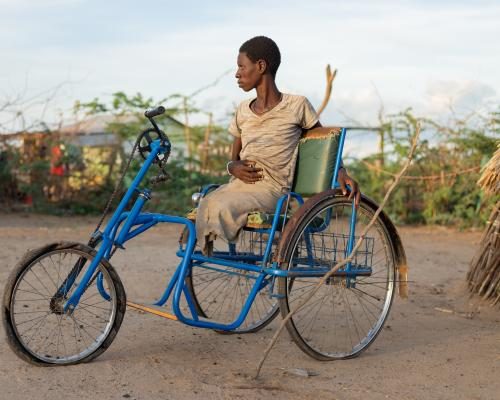
In a chilling incident last December, Ng'ikalei Loito encountered a crocodile while swimming in Lake Turkana, resulting in severe injuries and the loss of her legs. This alarming event highlights the rising frequency of crocodile attacks in northwest Kenya, driven by the changing landscape of the lake due to climate change.
Tragic Encounter with a Crocodile
On a sunny afternoon in December 2024, Ng'ikalei Loito, a 33-year-old mother of five, was enjoying a swim in the warm waters of Lake Turkana alongside her sisters-in-law. Suddenly, a crocodile attacked, biting her legs with such force that she thought her life was over. As she clung to a nearby tree, she screamed for help, her mind racing with thoughts of her children. "When a crocodile attacks, it feels like death is certain," she recalled in a recent interview from her home in Kalokol town. Originally reported by The Guardian.
Villagers rushed into the water, eventually forcing the crocodile to release Loito. However, the damage was horrendous; her legs were left bloody and mangled. After a grueling three-hour journey to the hospital in a police vehicle, medical staff plastered one leg and applied an external fixator to the other. The following day, it became clear that both limbs were severely damaged, leading to the heartbreaking decision to amputate.
Rising Waters and Displaced Habitats
Lake Turkana, the world's largest permanent desert lake, has seen its surface area expand by approximately 10% over the past decade, as per a government report from 2021. This expansion has not only displaced many communities but has also altered the habitats of Nile crocodiles, bringing these dangerous predators closer to human settlements. The rising water levels have submerged homes, schools, and essential infrastructure, impacting the livelihoods of countless families.
Researchers attribute the rising levels of Lake Turkana primarily to increased rainfall linked to the climate crisis, along with tectonic movement within the Rift Valley. The UN environment programme has warned that flooding in the region could become more frequent over the next two decades, exacerbating the dangers posed by crocodile encounters.
Community Responses to Crocodile Attacks
Elijah Chege, county warden for Turkana at the Kenya Wildlife Service (KWS), explained that as the lake's overflow has driven crocodiles closer to human habitation, the likelihood of attacks has surged. Traditional fishing practices, like using log boats, also increase vulnerability. "We have to teach the community to coexist with these animals," Chege stated, emphasizing the need for a balance between conservation and public safety.
KWS has initiated awareness campaigns to educate communities about high-risk areas and crocodile behavior. Local scouts have also been enlisted to monitor crocodile movements. While KWS does relocate aggressive crocodiles and, in extreme cases, euthanizes them, the attacks persist. In the past year alone, KWS reported seven fatalities and 15 injuries due to crocodile incidents.
The Human Cost of Crocodile Attacks
The emotional and physical toll of these attacks is profound. Ng'ispaan Long'olan, who lost his leg to a crocodile in Natirae village, echoed Loito's sentiments. He now sells water and charcoal while relying on crutches for mobility. Achiro Kephas, the referrals and emergency coordinator at Turkana's health ministry, noted that fishers are particularly at risk, with many deaths going unreported and survivors often left with lifelong disabilities.
As communities surrounding Lake Turkana grapple with the increased frequency of crocodile attacks, the stories of victims like Loito and Long'olan serve as stark reminders of the dangers posed by the lake's changing environment. The interconnectedness of climate change, wildlife behavior, and human safety highlights the urgent need for effective management strategies to protect both people and wildlife.
Looking ahead, residents and authorities must work collaboratively to devise solutions that mitigate the risks associated with crocodile attacks while fostering an understanding of the ecological balance in this unique region. With climate change continuing to reshape the landscape, the threat of crocodile encounters may only increase, necessitating proactive measures for community safety.
Originally reported by The Guardian. View original.