
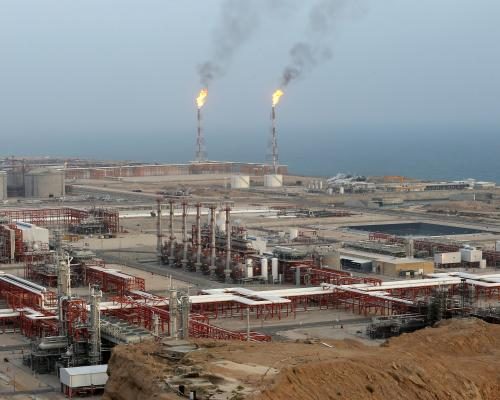
Iran has issued a stark warning of potential strikes against energy infrastructure throughout the Gulf region, following Israeli attacks on its largest gasfield, the South Pars. This marks a significant escalation in military operations since the onset of the ongoing war, as Iran's Revolutionary Guards threatened counterstrikes on facilities in Saudi Arabia, the UAE, and Qatar.
The Israeli airstrikes, reportedly conducted with U.S. consent, targeted the South Pars gas field, which Iran shares with Qatar and is known for holding the largest gas reserves in the world. The Iranian Revolutionary Guards have indicated that retaliation could occur "in the coming hours." This response signifies a notable shift in the conflict, as previous military actions have largely avoided Iran's oil and gas sector. Originally reported by The Guardian.
Rising Tensions and Economic Implications
The situation escalated sharply as Iranian state media reported missile strikes on its gas facilities at South Pars. In retaliation, the Revolutionary Guards identified specific targets, including Saudi Arabia's Samref refinery, the UAE's al-Hosn gas field, and Qatar's Mesaieed petrochemical complex. They emphasized that these locations have now become "direct and legitimate targets."
In a warning issued by the Iranian regime, all citizens and employees in these regions were advised to evacuate immediately. Eskandar Pasalar, the governor of Asaluyeh in southern Iran, condemned the U.S.-Israeli actions, calling it "political suicide" and suggesting that the conflict has transitioned into a "full-scale economic war." As the war progresses, the implications for global energy supplies have become increasingly concerning.
Impact on Global Oil Prices
The threat to Gulf energy infrastructure has already begun to affect global oil prices significantly. On Wednesday afternoon, the price of oil surged towards $110 a barrel as fears of further supply disruptions mounted. The international oil benchmark rose by as much as 5%, reaching $108.60, while Europe's gas benchmark jumped over 7.5% to exceed €55.50 per megawatt hour.
The conflict's impact on oil exports from the region has been substantial, with daily exports plummeting by at least 60% compared to pre-war levels. This decline is attributed to the Iranian drone and missile strikes, which have created a chokehold on exports through the strategically important Strait of Hormuz. Iran's ability to continue shipping crude oil through this route has been unimpeded, but threats to set ablaze vessels carrying crude from neighboring Gulf nations loom large.
Escalating Military Engagements
The recent escalation follows a series of Iranian attacks on vital energy facilities in the region, including the UAE's Shah natural gas field and Iraq's Majnoon oilfield. Furthermore, the UAE's Fujairah port, the largest oil storage facility, has also faced drone and missile strikes. This ongoing conflict has forced Gulf neighbors to curtail their oil and gas production, as infrastructure nears maximum capacity due to the disruptions.
Until now, the U.S. and Israel had refrained from targeting Iran's hydrocarbon infrastructure, focusing instead on military assets. However, the recent strikes on South Pars represent a significant departure from this strategy, raising the stakes for both sides. A Qatari government spokesperson, Majid al-Ansari, highlighted that targeting energy infrastructure constitutes a threat not just to regional stability but also to global energy security and the environment.
The current geopolitical landscape indicates that the war will continue to exert pressure on global energy markets, with escalating tensions in the Gulf likely to sustain high oil prices. Traders are closely monitoring these developments, as the potential for further disruptions looms large.
The conflict shows no signs of abating, with both sides poised for further action. As Iran prepares to respond to the recent strikes, the international community watches with bated breath, aware that any further military engagements could significantly disrupt not only regional stability but also the global energy landscape.
Originally reported by The Guardian. View original.