
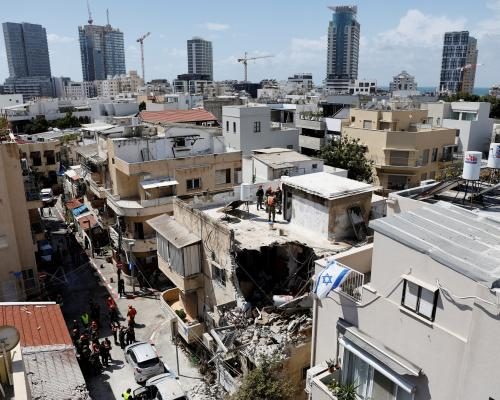
In a dramatic escalation of hostilities, Iran has vowed to "irreversibly destroy" critical infrastructure across the Middle East if the United States targets its energy facilities. This warning comes just hours after former President Donald Trump issued a stark ultimatum, threatening to "obliterate" Iranian power plants if the vital Strait of Hormuz remains closed.
Iran's Striking Retaliation
Overnight, Iranian missiles struck two southern Israeli cities, Arad and Dimona, injuring dozens and causing significant damage to residential buildings. The attacks, which left around 200 people wounded, including children in serious condition, signal a perilous escalation in the ongoing conflict that has now entered its fourth week. The Israeli army reported that it had been unable to intercept the missiles, marking a notable breach of their air defense systems. Originally reported by The Guardian.
Mohammad Bagher Ghalibaf, the speaker of Iran's parliament, stated on Sunday that any attack on Iran's energy infrastructure would render "vital infrastructure as well as energy and oil infrastructure across the region" legitimate targets. Following the missile strikes, Israeli Prime Minister Benjamin Netanyahu vowed to pursue senior commanders of Iran's Revolutionary Guards, declaring, "We're going after the regime. We're going after the IRGC, this criminal gang." His administration has pledged a strong military response to the attacks.
Heightened Tensions in the Strait of Hormuz
The Strait of Hormuz, a crucial passage for oil shipments, has become a focal point in the Escalating Tensions. Trump's ultimatum gives Iran 48 hours to reopen the strait, which has effectively been closed due to Iranian military actions. Ali Mousavi, Iran's representative to the International Maritime Organization, confirmed that while the strait remains operational for most shipping, vessels associated with "Iran's enemies" face restrictions. This closure has contributed to a significant oil crisis, with prices surging as much as 35% last week, marking the worst energy crisis since the 1970s.
As the situation develops, the implications for global oil supplies are severe. The strait is responsible for carrying about a fifth of the world's oil and liquefied natural gas, making its accessibility critical for the global market. Analysts have noted that Iran's actions threaten to destabilize not just regional security but also the broader international economy.
International Reactions and Military Posturing
The military exchanges between Israel and Iran have drawn international attention, with the World Health Organization warning of a "perilous stage" in the conflict. WHO Director-General Tedros Adhanom Ghebreyesus expressed concerns over attacks targeting nuclear sites, emphasizing the escalating threat to public health and environmental safety.
In an unexpected move, Iran launched long-range missiles targeting the US-British military base at Diego Garcia in the Indian Ocean, with two ballistic missiles being fired. Israeli military chief Eyal Zamir reported that one missile fell short, while another was intercepted. British cabinet minister Steve Reed dismissed any suggestions of an imminent threat to Europe from Iran, emphasizing the lack of credible assessment about the missile's intended targets.
As tensions escalate, both Iran and Israel have ramped up their military readiness. Israel's military has stated that it will respond decisively to any threats, further inflaming the potential for conflict. The situation remains fluid, with both nations on high alert and military capabilities being tested.
The Human Cost of Escalation
Since the onset of conflict on February 28, over 2,000 people have lost their lives due to the hostilities between the US-Israel coalition and Iran. The war shows no signs of abating, with each side retaliating against perceived provocations. Iranian forces have targeted Israeli positions, while Israel has denied responsibility for recent attacks on Iranian facilities, including a strike on its main nuclear enrichment site at Natanz.
The human toll of this ongoing conflict is staggering, with reports of civilian casualties and injuries mounting daily. As international calls for de-escalation grow louder, the situation remains precarious, with both sides poised for further military engagements.
As diplomatic efforts falter, the possibility of a broader conflict looms. With military posturing and aggressive rhetoric dominating the landscape, the region stands at a crossroads, and the repercussions of these actions could redefine Middle Eastern geopolitics for years to come.
Originally reported by The Guardian. View original.