
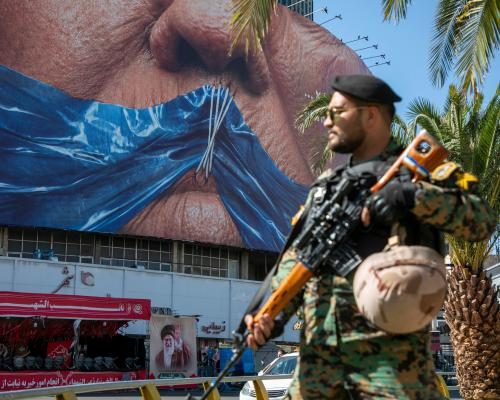
Iran has officially communicated its response to a recent U.S. peace proposal, coinciding with rising tensions that threaten a month-old ceasefire in the region. Iranian state media indicated that the response was conveyed to Pakistani mediators, though details surrounding the nature of the reply remain undisclosed. This development follows a one-page, 14-point memorandum of understanding presented by the U.S. a week ago, aiming to reopen the strategically vital Strait of Hormuz while establishing a framework for discussions regarding Iran's nuclear program.
Ceasefire Showing Signs of Strain
The announcement of Iran's response arrives as the ceasefire brokered by Pakistan, effective since April 8, appears increasingly fragile. Reports of drone strikes have emerged from various locations, signaling a potential escalation of hostilities. On Sunday, both the United Arab Emirates and Kuwait reported incursions by drones into their airspace. Additionally, a drone attack ignited a small fire on a vessel off the coast of Qatar, raising alarms about maritime safety in the region. Originally reported by The Guardian.
Details regarding the targeted ship near Qatar remained sparse, with the country's defense ministry confirming only that it originated from Abu Dhabi. In light of these events, the UAE defense ministry stated it successfully intercepted the drones, attributing the attacks to Iranian forces. Meanwhile, Kuwait's defense spokesperson remarked that their military was compelled to address the drone incursions in accordance with established procedures without specifying the assailants.
Impact on Global Oil Markets
The ongoing tensions in the Strait of Hormuz, a critical chokepoint for global oil transportation, have significant implications for the international economy. The U.S. and Iran have both sought to assert control over this vital maritime route, which has been plagued by previous blockades and military confrontations. An earlier Iranian proposal suggested lifting parallel U.S. and Iranian blockades, which have exacerbated rising oil prices, contributing to global economic uncertainty. The current U.S. proposal aims to facilitate maritime navigation and address the sanctions hampering Iran's economy while also reopening the strait.
Former President Donald Trump had previously initiated "Project Freedom" on May 4, intending to create a safe passage for the trapped vessels. However, the operation was halted after only 36 hours due to a lack of support from Saudi Arabia, which refused to allow U.S. forces to utilize its bases. The project ultimately facilitated the passage of just two U.S.-flagged ships before being called off.
Regional Reactions and Military Readiness
The recent drone strikes and military readiness displayed by Iranian officials have heightened concerns among neighboring countries. Brigadier General Akrami Nia, a military spokesperson for Iran, stated that their forces are at "full readiness" to safeguard the nation's stockpile of highly enriched uranium (HEU). He expressed apprehensions about potential theft attempts through infiltration or airborne operations. The International Atomic Energy Agency (IAEA) estimates that a significant portion of Iran's uranium stockpile is deeply buried in Isfahan, complicating any potential military operation targeting it.
On the diplomatic front, Qatar's Prime Minister Sheikh Mohammed bin Abdulrahman Al Thani condemned the drone strike on the Qatari vessel, labeling it a "serious escalation." He emphasized that using the Strait of Hormuz as leverage would only intensify the existing crisis. In a discussion with Iranian Foreign Minister Abbas Araghchi, the Prime Minister underscored the importance of preserving maritime navigation freedom.
Meanwhile, Israeli military actions continue to target Hezbollah positions in Lebanon, albeit at a reduced intensity. Recent Israeli strikes have resulted in fatalities and injuries among civilians and emergency responders, with Lebanon's health ministry reporting 36 deaths and 74 injuries as of Saturday. The Israeli military also announced the interception of Hezbollah drones approaching its troops.
As negotiations between the U.S. and Iran advance, two crucial issues will likely dominate future nuclear discussions: the suspension of Iranian uranium enrichment and the management of the country's HEU stockpile. The situation remains fluid, and the response from both nations could significantly impact not just regional security but also the global economy.
Originally reported by The Guardian. View original.