
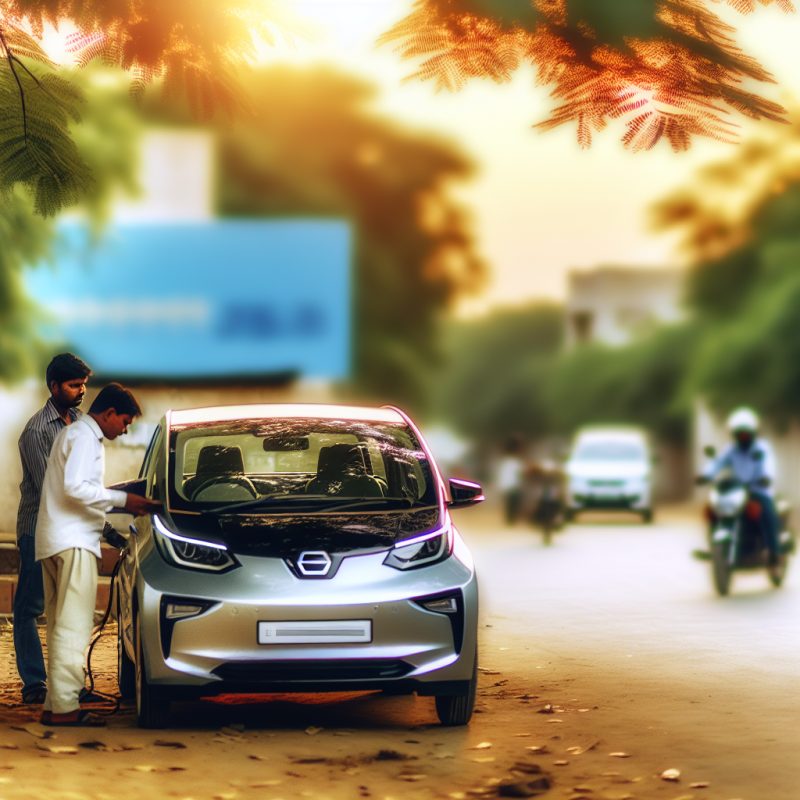
In a striking development for the Indian electric vehicle (EV) market, Tata Motors has reported unprecedented sales figures for 2026, achieving a remarkable growth rate that underscores the country's shift towards sustainable transportation. The automotive giant recorded a staggering 200,000 electric vehicles sold this year, marking a 150% increase compared to 2025.
Unprecedented Growth in EV Sales
Tata Motors' impressive performance in the EV sector represents a significant milestone not only for the company but also for India's broader commitment to reducing carbon emissions. The company's record sales in 2026 are partly attributed to the increasing consumer awareness of climate change and the government's push for electric mobility. This surge reflects a growing trend among Indian consumers who are increasingly opting for electric vehicles over traditional gasoline-powered models. Learn more on Investopedia.
The demand for EVs in India has been bolstered by several factors, including the introduction of new models, competitive pricing, and attractive government incentives. Tata Motors expanded its electric lineup significantly with the launch of the Nexon EV and the Tiago EV, which have been well-received in the market due to their affordability and performance. The Nexon EV, priced attractively at around ₹14 lakh, has emerged as a favorite among urban consumers.
Government Support Drives Adoption
Government initiatives have played a pivotal role in accelerating the adoption of electric vehicles across India. The Faster Adoption and Manufacturing of Hybrid and Electric Vehicles (FAME) scheme has provided substantial subsidies, making EVs more accessible to a wider audience. Under this scheme, buyers can avail incentives up to ₹1.5 lakh, significantly lowering the overall cost of ownership.
Moreover, the Indian government has set ambitious targets under its National Electric Mobility Mission Plan, aiming for 30% of all vehicles on the road to be electric by 2030. This goal has spurred both manufacturers and consumers to embrace electric mobility, creating a favorable environment for companies like Tata Motors to thrive. The company's commitment to sustainability is evident in its strategic investments in battery technology and charging infrastructure.
Market Dynamics and Competition
The electric vehicle market in India is witnessing heightened competition as other automakers attempt to capture their share of the growing demand. Companies such as Mahindra Electric and MG Motors are also ramping up their EV offerings. Mahindra has introduced the XUV400, which competes directly with Tata's Nexon EV, while MG Motors has launched the ZS EV, further enriching the market landscape.
However, Tata Motors remains at the forefront, leveraging its extensive dealership network and service capabilities to ensure customer satisfaction and reliability. The brand's reputation for quality and performance has been a crucial factor in its success. As of now, Tata Motors holds over 60% of the EV market share in India, a testament to its strong brand loyalty and strategic foresight.
Future Outlook for Tata Motors and the EV Market
Looking ahead, Tata Motors plans to continue its aggressive expansion in the EV segment. The company has announced plans to invest ₹75 billion in new electric vehicle technologies and production facilities over the next five years. This investment aims to enhance its battery manufacturing capabilities and develop next-generation EVs that cater to a broader audience.
The company also aims to introduce new models, including electric SUVs and compact cars, to meet diverse consumer demands. As the infrastructure for EVs improves, including more charging stations and battery-swapping technology, Tata Motors is well-positioned to capitalize on the growing market.
Analysts predict that the overall EV market in India could reach 1 million units by 2030, driven by consumer demand, technological advancements, and governmental support. Tata Motors' proactive approach and commitment to innovation will likely keep it at the forefront of this burgeoning industry.
In summary, Tata Motors' record sales in 2026 highlight a significant moment for the Indian electric vehicle market. With ongoing government support, evolving consumer preferences, and a commitment to sustainability, the future looks bright for both Tata Motors and the broader EV landscape in India.