
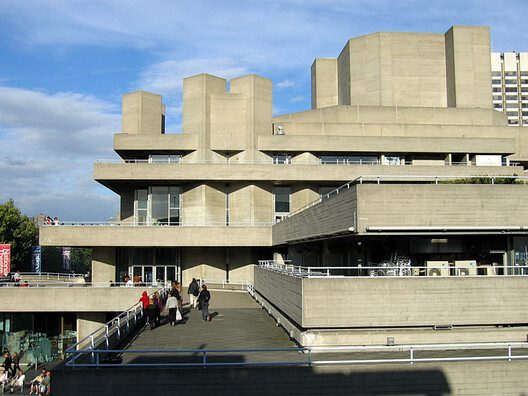
The Southbank Centre in London, a hallmark of British Brutalism, has finally secured Grade II listed status after a 35-year advocacy campaign. This designation, granted by the UK government's Department for Culture, Media and Sport (DCMS) on February 10, 2026, recognizes the complex's architectural significance and cultural impact.
A Landmark of Brutalist Architecture
Constructed between 1963 and 1968, the Southbank Centre is a striking cultural complex that includes venues like the Queen Elizabeth Hall, the Hayward Gallery, and the Purcell Room. Designed by the Architects' Department of the London County Council, under the direction of architect Norman Engleback, the site has been a focal point for the arts in London, hosting a diverse array of events ranging from theatre and dance to music and literature.
Despite its cultural importance, the Southbank Centre faced considerable criticism upon its opening. In 1967, a poll conducted by engineers deemed the Queen Elizabeth Hall as "the supreme ugly," while the Daily Mail famously labeled it "Britain's ugliest building." However, over the years, perceptions have shifted, and the site is now celebrated for its architectural audacity and contribution to the urban landscape.
Long-Awaited Recognition
The journey to heritage protection has been arduous. The Twentieth Century Society and Historic England have advocated for the Southbank Centre's listing on six occasions since 1991, yet their appeals were repeatedly denied by successive Secretaries of State. The recent granting of Grade II status is a significant victory for preservationists who have long argued for the site's recognition as an essential piece of modern architectural heritage.
This new listing not only protects the buildings themselves but also the essential elements that contribute to the Southbank Centre's character, including the complex terraced walkways, stairs, and even the iconic skatepark undercroft. These features create a unique environment that promotes public engagement and artistic expression, firmly placing the Southbank Centre in the context of London's post-war architectural narrative.
Significance of Grade II Listing
Grade II status is the most common classification for listed buildings, applied to structures of special interest. Approximately 91.7% of listed buildings fall under this category. The Southbank Centre now joins a prestigious list of sites protected by law, which includes not only historic buildings but also monuments, parks, and gardens across England.
Listed buildings in the Grade II category must adhere to specific regulations regarding alterations and renovations, ensuring that their historical integrity is maintained. This is a crucial step in safeguarding the Southbank Centre's future, allowing it to continue serving as a vibrant cultural hub while respecting its architectural legacy.
A Bright Future Ahead
The recognition of the Southbank Centre as a Grade II listed building signals a transformative moment in the appreciation of Brutalist architecture in the UK. As debates surrounding modernism and heritage continue to evolve, this designation may pave the way for further protections for similar structures across the country.
With the Southbank Centre now firmly established as a protected landmark, its future looks promising. The complex can continue to thrive as a center for artistic innovation while educating visitors about its architectural significance. This landmark offers a vivid example of how modern architecture can engage with the public, fostering a dialogue about art, culture, and urban space.