
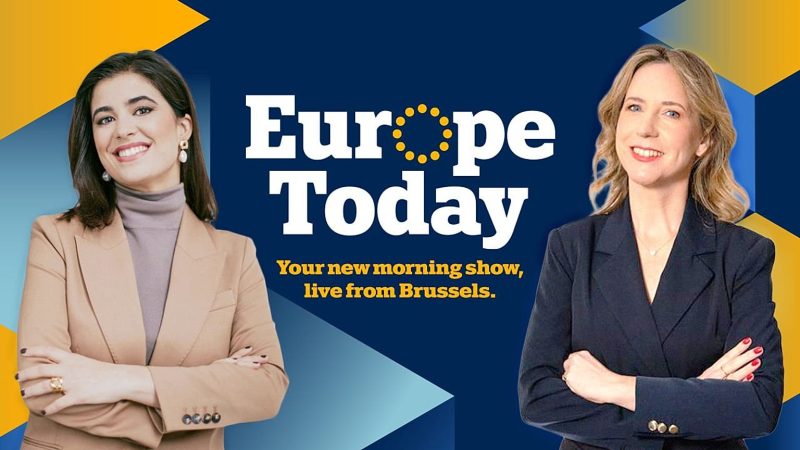
As global tensions rise, the Munich Security Conference (MSC) has emerged as a crucial platform for dialogue among world leaders. This year's conference, held over the weekend, saw significant discussions surrounding European defense strategies and nuclear policy. Euronews' flagship morning program "Europe Today" highlighted these key issues, featuring an exclusive interview with Fabrice Pothier, CEO of Rasmussen Global and former Director of Policy Planning for NATO.
Fabrice Pothier Reflects on Security Challenges
Fabrice Pothier provided an in-depth analysis of the current security landscape during his interview. He emphasized that the geopolitical climate is increasingly complex, calling for a united European response to threats. Pothier noted, "The challenges we face today, from cyber threats to military aggression, necessitate a coordinated effort among EU nations." His insights underscore the urgency of reinforcing European defense mechanisms in light of recent global tensions.
During the MSC, leaders discussed the potential of a stronger European military framework, focusing on the mutual defense clause that has been at the forefront of EU discussions. Pothier articulated the necessity of a unified stance, particularly in response to external pressures. He remarked, "The time for discussions is over; we need actionable policies that reflect our commitment to mutual defense." This sentiment resonates with many European leaders currently advocating for enhanced defense collaboration.
Understanding the European Mutual Defense Clause
Jakub Janas, a security analyst, shed light on the European mutual defense clause, which has gained traction in recent debates. This clause, part of the Lisbon Treaty, obligates EU member states to assist one another in the event of an armed attack. Janas explained that while it exists as a framework, the practical implementation remains challenging. "The clause provides a legal basis for collective defense, but translating that into effective military action requires consensus and readiness among member states," he stated.
With the ongoing threat of conflicts spilling over from neighboring regions, many EU officials are advocating for a clearer understanding of this clause. The MSC served as a backdrop for these discussions, highlighting the need for member states to revisit their commitments and capabilities. Janas believes that strengthening this framework is essential for establishing a credible European defense posture.
The Debate Over a Common European Nuclear Umbrella
Another focal point of the MSC was the contentious debate surrounding a common European nuclear umbrella. Alice Tidey reported on the differing opinions among EU leaders regarding nuclear deterrence. Some argue that a unified nuclear strategy could enhance security, while others express concerns over the implications of nuclear sharing.
This debate reflects broader anxieties about regional stability and the role of nuclear weapons in deterrence strategies. Tidey highlighted that while some nations advocate for a shared nuclear policy, others are wary of the potential escalation of tensions with non-EU countries. The discussion is particularly poignant given the historical context of nuclear weapons in Europe and the changing dynamics of international relations.
Berlin's Berlinale Festival Sparks Controversy
As the MSC wrapped up, controversy erupted at the Berlinale cinema festival in Berlin, as reported by Laura Fleischmann. Comments made by jury members regarding political issues ignited debates over artistic freedom and responsibility. The festival, which attracts global attention, became a microcosm of the broader challenges faced by Europe in balancing free expression with societal sensitivities.
Fleischmann noted that this incident reflects the intersection of culture and politics, particularly in a region grappling with its identity amid rising populism. The discussions around Berlinale's comments underscore the importance of fostering dialogue in creative spaces while navigating political landscapes. This controversy added another layer to the narrative emerging from the MSC, where cultural and security issues often intertwine.
As Europe contemplates its future in a rapidly changing geopolitical environment, the discussions from the Munich Security Conference highlight both the challenges and the opportunities for collaboration. Leaders are now tasked with translating dialogue into action, ensuring that Europe remains resilient in the face of emerging threats.