
On a Monday evening in Aberdeen, George Preston donned his union flag suit to attend a Reform UK rally, reflecting the party's rising influence in Scotland's political landscape. Since joining Reform in 2024, after the party attracted its first councillor defections from the Scottish Conservatives, Preston has actively campaigned in a region where polling suggests Reform is competing with Scottish Labour to become the official opposition to the Scottish National Party (SNP) in the upcoming Holyrood elections on May 7. "Very, very few have said: 'Have this back,'" he noted, emphasizing the growing support for the party.
The north-east of Scotland has traditionally been a battleground between the Tories and the SNP, particularly due to the area's strong pro-Brexit sentiment. Local concerns center around fishing, farming, and oil and gas, and the recent decline in support for the Scottish Conservatives has left a significant political void that Reform is eager to fill. The party's appeal, however, appears to extend beyond its traditional strongholds, with rising support in post-industrial towns and villages across the central belt, including areas surrounding Glasgow. Originally reported by The Guardian.
Escalating Concerns Over Immigration
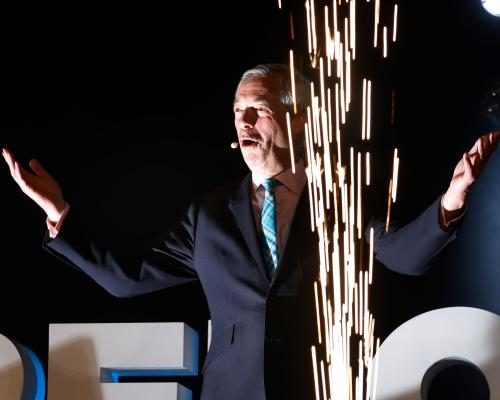
At the rally, Reform's Scottish leader, Malcolm Offord, a millionaire financier, addressed the audience by discussing the challenges faced by local families in Glasgow. He claimed certain families were being "pushed to the back of the [housing] queue" due to an influx of asylum seekers. Offord also cited a central belt GP's report alleging that HIV-positive migrants were receiving treatments costing £11,000 annually. "It's not racism to say that is not fair," he stated, underscoring the party's focus on immigration as a central issue.
However, Reform's candidates have faced scrutiny over allegations of racism. One withdrew after social media posts surfaced that labeled former first minister Humza Yousaf as an "Islamist moron," while another candidate remains despite openly supporting Tommy Robinson and advocating for the deportation of Muslims. This ongoing controversy complicates the party's narrative as anti-racism activists in Aberdeenshire recently uncovered antisemitic and racist literature in public spaces.
A Community Divided
Omowunmi Ola-Edagbami, a Nigerian woman and Aberdeen resident since 2022, shared her experiences with racism in the area. After discovering racist materials at a bus stop two years ago, she has since seen similar content circulating on social media. "It horrified me," she remarked, reflecting on the impact of such material on her children. She expressed concerns about their safety and the environment they are growing up in.
In response to the rising tide of anti-immigrant sentiment, hundreds participated in a unity march through Aberdeen, organized to advocate for a city that "welcomes refugees and rejects hate." Events like these, led by Scotland's active anti-racism movement, are increasingly common as the elections draw near. Ola-Edagbami, who founded Black Scottish Stories to amplify the voices of Black individuals in Scotland, noted that while she has formed meaningful friendships with Scottish people, the immigrant experience remains complex.
Changing Political Landscape
Ola-Edagbami pointed out that although Scotland is often perceived as welcoming, it doesn't necessarily mean that immigrants feel fully understood or included. She observed a visible shift in attitudes over the years, saying, "In both my personal experience and the stories I've documented, there is a sense that racism is more visible." This observation aligns with recent polling, which indicates growing concerns among Scottish voters regarding immigration.
Reform UK has effectively tapped into the fears surrounding asylum housing, especially in Glasgow, where recent controversies have arisen. Last December, Nigel Farage faced backlash from other Scottish political leaders for asserting that one in three Glasgow schoolchildren do not speak English as a first language, claiming this represented a "cultural smashing" of the city. However, Glasgow City Council countered this claim, clarifying that 27.8% of pupils are bilingual learners with varying levels of English proficiency, most of whom exhibit good conversational skills.
Meanwhile, protests against asylum hotels have seen the involvement of far-right groups, prompting counter-demonstrations from pro-immigrant advocates. Furthermore, the appropriation of the Scottish saltire for anti-immigration activism has raised concerns among community leaders and activists alike, reflecting a broader national issue regarding identity and immigration.
As the Holyrood elections approach, the tension surrounding immigration and identity continues to shape the political discourse in Scotland. The outcome could redefine party alignments and influence the future of immigration policy in the region, signaling a critical moment in Scotland's evolving political landscape.Originally reported by The Guardian. View original.