
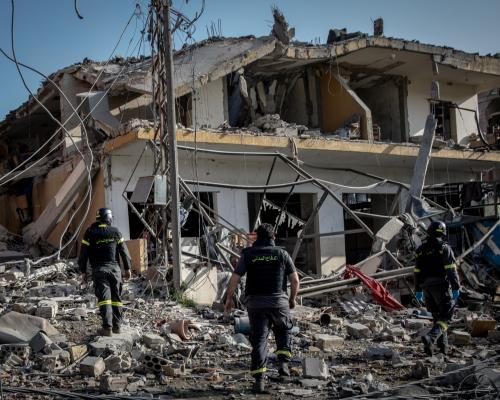
In escalating tensions in the Middle East, Hezbollah has urged Lebanon to withdraw from ongoing negotiations with Israel, while Australia's Prime Minister Anthony Albanese seeks to secure fuel supply assurances during his visit to Brunei and Malaysia. This comes as the situation intensifies with a blockade of the Strait Of Hormuz beginning and significant casualties reported in Lebanon.
Hezbollah's Stance on Lebanon-Israel Negotiations
Hezbollah, the Lebanese militant group, has made its position clear regarding the upcoming negotiations between Lebanese and Israeli representatives in Washington. Wafiq Safa, a senior member of Hezbollah's political council, stated unequivocally, "As for the outcomes of this negotiation between Lebanon and the Israeli enemy, we are not interested in or concerned with them at all." This declaration comes just before the first face-to-face talks in decades between nations that have no diplomatic relations. Originally reported by The Guardian.
In a televised address, Hezbollah's leader Naim Kassem echoed this sentiment, urging Lebanon to reconsider its participation in these discussions. The negotiations follow a surge in violence, marked by Hezbollah firing rockets into northern Israel on March 2, leading to extensive Israeli airstrikes in Lebanon. The Lebanese health ministry reports at least 2,055 fatalities due to Israeli strikes, including 252 women, 165 children, and 87 medical personnel, with more than 6,588 individuals injured and over 1 million displaced.
Australia's Diplomatic Fuel Security Efforts
Amid the turmoil in the Middle East, Australian Prime Minister Anthony Albanese has embarked on a four-day diplomatic mission to Brunei and Malaysia, aiming to bolster the country's fuel supply security. Departing Sydney on Tuesday, this visit marks the first by an Australian prime minister to Brunei in over a decade. Both Brunei and Malaysia are critical players in Australia's fuel supply chain, with Brunei accounting for approximately 9% of Australia's diesel imports and Malaysia being the third-largest supplier.
Albanese's discussions will focus on ensuring a steady flow of petrol and diesel, particularly in light of the ongoing conflict. Professor Hussein Dia from Swinburne University described the trip as a crucial aspect of what he termed "fuel diplomacy," aimed at preparing for potential long-term disruptions in supply. He emphasized, "I don't think it's a sign of immediate shortage or to say 'give us priority', it's really to maintain flow." This proactive approach indicates the Australian government is bracing for a prolonged period of uncertainty surrounding energy supplies.
US Blockade of Iranian Ports Starts
As global tensions mount, the United States has initiated a blockade of Iranian ports, heightening the stakes in the ongoing conflict between the US-Israeli coalition and Iran. Although US Central Command (Centcom) has not formally announced the blockade, it was set to come into effect at 5:30 PM Iranian time on Monday. This blockade applies to all ships entering or leaving Iranian ports, while vessels utilizing non-Iranian ports remain unaffected.
Former President Donald Trump stated that approximately 34 ships had passed through The Strait Of Hormuz on Sunday, though he provided no evidence for this claim. He insisted on the need for a strong stance against Iran, declaring, "Iran will not have a nuclear weapon, and we're going to get the dust back. We'll get it back, either we'll get it back from them, or we'll take it." This blockade significantly impacts the Strait of Hormuz, through which about 20% of the world's oil and gas supply transits.
US-Iran Relations Amid Ongoing Conflict
The current situation has prompted ongoing discussions between US officials and Iranian counterparts. Reports suggest that there is continued engagement aimed at negotiating a potential agreement, even as tensions escalate. An unnamed US official indicated, "There is continued engagement between the US and Iran and forward motion on trying to get an agreement." This reflects the complex dynamics at play, as the US seeks to navigate its strategic interests in the region while addressing the potential for further conflict.
As the parties involved grapple with these developments, the international community watches closely. The outcomes of the Lebanon-Israel talks, the effects of the US blockade, and the broader implications for regional security remain uncertain. With Hezbollah firmly opposing negotiations and Australia seeking to stabilize its fuel supplies, the situation in the Middle East continues to evolve, underscoring the intricate interplay of diplomacy, conflict, and economic considerations.
Originally reported by The Guardian. View original.