
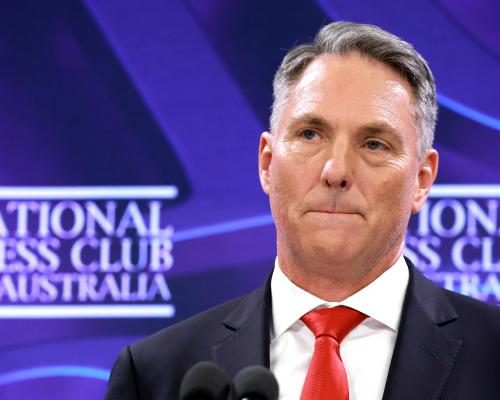
Amid growing calls for increased Defence Spending, Australian Defence Minister Richard Marles faces pressure from the United States, particularly from former President Donald Trump. During a meeting in Singapore nearly a year ago, Trump urged Australia to raise its defence expenditure to 3.5% of its GDP, reflecting his frustration with allies he perceives as under-investing in their own security. In a recent address, Marles disclosed plans for significant increases in defence spending, casting a spotlight on the complexities and implications of these fiscal strategies.
Marles Responds to Defence Spending Pressures
Richard Marles, who has been vocal about the need for a pragmatic approach to defence funding, initially downplayed Trump's demands. At the time, Marles, alongside Prime Minister Anthony Albanese, emphasized that Australia's defence budget would not be dictated by arbitrary figures, but rather driven by necessity and strategic requirements. However, the narrative shifted recently when Marles revealed that Australia is projected to surpass the 3% of GDP spending threshold by 2033, as part of the new national defence strategy. Originally reported by The Guardian.
In his address to the National Press Club, Marles outlined a commitment to increase defence spending to approximately 2.4% of GDP over the next decade. He noted additional funding of $14 billion over the four-year forward estimates and $53 billion over the next ten years, effectively indicating that the current Labor government has increased defence spending by around $117 billion compared to the previous Coalition government. This move appears to align more closely with the expectations set forth by the U.S., raising questions about Australia's defence priorities.
Complications of Defence Spending Reporting
The figures presented by Marles, while ambitious, have drawn scrutiny due to the opaque nature of defence spending calculations. As noted by Linus Cohen from the Australian Strategic Policy Institute, the way Australia accounts for major projects and procurement differs significantly from NATO standards. Under NATO guidelines, member countries account for expenses when a military asset, such as a warship, is built and paid for, whereas Australia spreads costs over the asset's operational lifetime.
Moreover, certain budget items that fall outside the defence portfolio, like international intelligence operations and superannuation benefits for service personnel, will also be factored into the GDP percentage for defence spending. This complexity can obscure the true state of defence financing in Australia, leaving taxpayers and analysts looking for clarity amidst the figures.
AUKUS Submarine Project: Costs and Commitments
Turning to the AUKUS nuclear submarines agreement, Marles provided an update on the overall costs associated with this ambitious project. Initially projected between $53 billion and $63 billion, estimates for the AUKUS initiative have now risen to between $71 billion and $96 billion over the same timeframe. Marles attributed this increase to advancements in related infrastructure, specifically the development of the Osborne shipyard in South Australia and the Henderson base in Western Australia.
Under the AUKUS framework, Australia is set to receive the first Virginia-class submarine from the United States by 2032, with subsequent arrivals scheduled every four years. The bespoke Australian-built submarines are expected to begin coming online in 2042. With these substantial investments, the government is clearly committed to enhancing Australia's naval capabilities, yet the rising costs have raised eyebrows among opposition parties and defence analysts.
The Political Landscape and Public Scrutiny
As pressure mounts from various quarters-including the opposition, media, and defence commentators-Marles has clearly felt the heat. In his recent speech, he pushed back against critics, stating that the rise in defence spending is not influenced by think tanks, retired military Leaders, or discredited bureaucrats. This assertion reflects an attempt to assert control over the narrative surrounding defence policy, which has become a contentious issue in Australian politics.
However, despite Marles' insistence on transparency, the complexities surrounding defence budgeting indicate that clarity may be elusive. With the pressures of international relations and national security looming large, how Australia navigates its defence spending will remain a significant topic of discussion.
As the government prepares to make critical decisions in the coming years, the balancing act between meeting international obligations, responding to domestic needs, and ensuring taxpayer accountability will be crucial. Stakeholders will be watching closely to see how these budgetary decisions unfold amid evolving geopolitical dynamics.Originally reported by The Guardian. View original.