
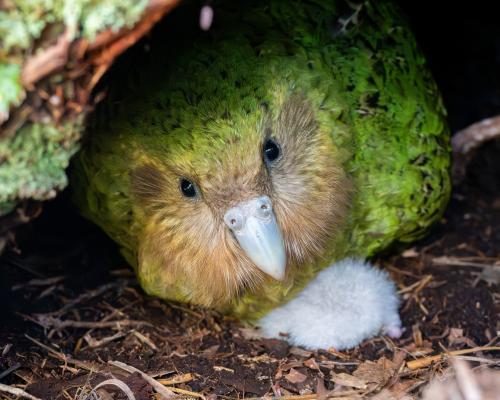
In the remote southern fjords of New Zealand, a captivating live stream of Rakiura, a kākāpō parrot, caring for her hatchlings has drawn over 100,000 viewers from around the world. This rare glimpse into the life of one of the planet's most peculiar and endangered birds highlights the ongoing efforts to revive the kākāpō population, which once faced near extinction.
A Unique Viewing Experience
Since mid-January, the New Zealand Department of Conservation has been broadcasting a live feed featuring Rakiura and her fluffy chick, which is often seen jostling for food and making its distinctive kazoo-like sounds. Through a hidden camera, viewers can observe the attentive mother as she shelters her chick beneath her green wings, defends her nest from intruding birds, and tends to its needs. The live stream has created an interactive community where fans from across the globe share their joy and excitement in a chat forum dedicated to the event. Originally reported by The Guardian.
Many viewers express their admiration for Rakiura and her chicks, posting comments such as, "This site is my lovely distraction from all the terrible things happening in the world around us," and "I'm following the story of this nest with curiosity and wonder." The live feed offers a unique opportunity for people, including those from the United Kingdom, Finland, and Germany, to connect with wildlife and celebrate the resilience of a species that has faced immense challenges. As Rakiura continues to nurture her brood, the number of viewers often exceeds 100, even during her long hours of rest.
Kākāpō: The World's Fattest Parrot
The kākāpō is a remarkable bird, known as the world's fattest parrot, and is both nocturnal and flightless. Once thriving across New Zealand, the kākāpō population drastically declined due to the introduction of predators like cats and stoats. By the early 1900s, their numbers had dwindled to the brink of extinction, prompting a recovery program in 1995 that managed to boost the population from just 51 to 236 birds, including 83 breeding-age females.
This breeding season appears particularly promising as conservationists mark a significant turning point in kākāpō recovery. Rakiura has already hatched three chicks, and with 78 nests and 247 eggs laid so far this season, experts are cautiously optimistic. Dr. Andrew Digby, the science adviser for kākāpō at the Department of Conservation, believes this could be the largest breeding season on record, fueled by a bountiful fruiting of rimu berries, which are essential to the kākāpō diet.
Community Engagement and Conservation Efforts
The live stream serves not only as a window into the lives of these extraordinary birds but also as an educational platform for the public. Dr. Digby, who has been instrumental in establishing the live feed, notes that it has sparked widespread interest in the kākāpō's recovery. "People love the characters and the relationship between the birds," he explains. "They are heavily invested in the fate of those chicks, what their weight curves are going to be." As the public engages with the live stream, they contribute to a growing awareness and appreciation for the kākāpō.
The conservation team is taking a new approach this breeding season, shifting their focus from individual recovery efforts to broader population recovery. This strategy includes reducing the intensive methods used in previous years, such as feeding adult birds. Instead, staff monitor the nests and may move eggs and chicks between mothers to enhance their survival chances. "We're moving from individual recovery to population recovery - and that's what this breeding season signifies," says Dr. Digby.
The Future of the Kākāpō
The kākāpō's recovery efforts continue to evolve as conservationists adapt to new challenges and opportunities. Rakiura's nurturing behavior, coupled with the potential for a record number of chicks, symbolizes hope for the species. With ongoing monitoring and support, the kākāpō's future may be brighter than ever.
As viewers remain captivated by the live stream, the emotional connection many feel toward these birds underscores the importance of conservation work. The fascination with Rakiura and her chicks is not just a momentary distraction; it represents a collective commitment to protecting and celebrating the wonders of the natural world. For those tuning in, the kākāpō saga is a reminder that every effort counts in the fight for survival, and the journey of these remarkable birds is far from over.
Originally reported by The Guardian. View original.