
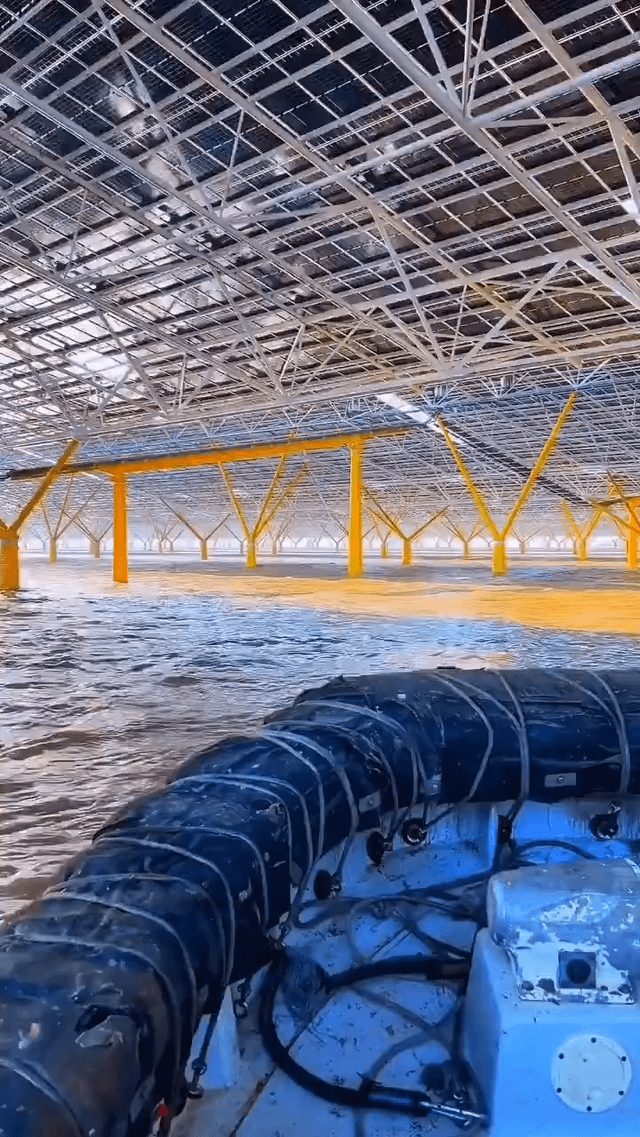
In a groundbreaking move towards sustainable energy, China is installing solar panels on bodies of water. This initiative allows the country to conserve valuable land for agricultural purposes while also advancing its renewable energy goals. The floating solar farms are being developed across various provinces, marking a significant step in China's energy strategy.
Transforming Water Surfaces into Energy Sources
China is known for its ambitious renewable energy projects, and the latest innovation involves the strategic placement of solar panels on lakes, reservoirs, and other water bodies. The floating solar panels not only harness sunlight more efficiently but also reduce evaporation from water surfaces, a critical factor in China's arid regions. This dual benefit of energy generation and water conservation underscores the project's importance in a country facing severe water shortages. Originally reported by r/nextfuckinglevel.
One of the most notable projects is located in the eastern province of Jiangsu, where over 100 megawatts (MW) of solar capacity has been installed on a series of floating platforms. These projects are designed to be cost-effective, with the price of solar panel installations dropping significantly over the past decade. As of 2023, the average cost of solar energy in China has decreased to approximately $0.03 per kilowatt-hour, making it one of the most affordable energy sources globally.
A Win-Win for Agriculture and Energy Production
The initiative to place solar panels on water not only addresses energy needs but also protects agricultural land, which is increasingly under threat from urbanization and industrialization. By utilizing water surfaces, China can maintain its agricultural output while expanding its renewable energy capacity. This approach is crucial as the country aims to meet its ambitious target of reaching carbon neutrality by 2060.
According to the National Energy Administration, China is expected to double its solar capacity to 1,200 gigawatts (GW) by 2030. The floating solar farms will play a pivotal role in achieving this goal, particularly in densely populated regions where land is scarce. With the potential to generate energy without encroaching on agricultural land, these projects represent a harmonious balance between energy production and food security.
Environmental Benefits and Future Prospects
Floating solar panels not only serve practical purposes but also bring environmental benefits. By reducing evaporation rates, these installations help conserve water resources, which is vital for irrigation in agricultural areas. Additionally, the cooling effect of water can increase the efficiency of solar panels, allowing them to generate more electricity compared to traditional land-based setups.
The success of the floating solar initiative has sparked interest from other countries seeking to replicate China's model. Nations facing similar challenges of land scarcity and water conservation are looking to China as a leader in innovative renewable energy solutions. As of now, more than 30 countries have expressed interest in floating solar technology, highlighting its global significance.
Challenges Ahead for Floating Solar Technology
Despite its advantages, the floating solar panel initiative is not without challenges. Issues such as the durability of the platforms, maintenance costs, and the impact on local ecosystems must be addressed. Moreover, regulatory hurdles can slow down the deployment of these technologies as they often require extensive environmental assessments.
China is actively working to overcome these challenges by investing in research and development. The government has allocated significant funds to enhance the resilience and efficiency of floating solar technologies. As these barriers are dismantled, the potential for widespread adoption becomes increasingly viable.
So, China's innovative approach to solar energy through floating panels is a significant development in the global shift towards sustainability. By cleverly utilizing water bodies, the country not only meets its energy demands but also protects its agricultural land, setting a precedent for future renewable energy projects worldwide. As the world watches, this initiative could redefine how nations balance energy production with environmental conservation.
Originally reported by r/nextfuckinglevel. View original.