
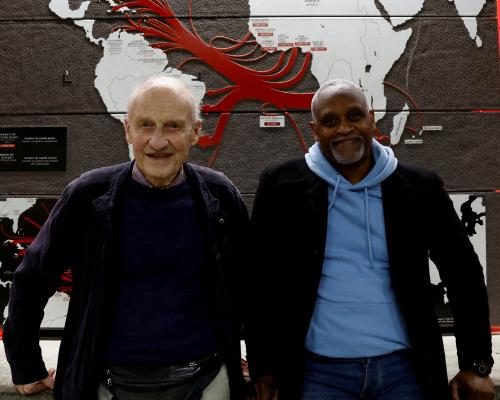
An 86-year-old man, Pierre Guillon de Prince, has made a groundbreaking apology in France for his family's involvement in transatlantic slavery, marking what is believed to be the first formal expression of regret from a descendant of slave traders in the country. Guillon de Prince's ancestors were prominent shipowners based in Nantes, historically recognized as France's largest port for the transatlantic slave trade. They transported approximately 4,500 enslaved Africans and owned plantations in the Caribbean. Guillon de Prince delivered this significant apology on Saturday, urging other French families to acknowledge their historical ties to slavery and calling for more than just symbolic gestures from the French government to address this painful chapter in history.
Call for Confrontation and Accountability
In his poignant address, Guillon de Prince emphasized the urgency of confronting France's colonial past. "Faced with the rise of racism in our society, I felt a responsibility not to let this past be erased," he stated. His remarks came during a gathering in Nantes, coinciding with the inauguration of an 18-meter replica ship mast designed to honor the memory of enslaved individuals. This event was a collaborative effort with Dieudonné Boutrin, a descendant of enslaved people from Martinique, who described Guillon de Prince's apology as a courageous act. Boutrin noted that many descendants of slave traders hesitate to speak out due to fears of reopening old wounds and inciting anger. Originally reported by The Guardian.
Historical Context of French Involvement in Slavery
The transatlantic slave trade, which spanned from the 15th to the 19th centuries, forcibly transported at least 12.5 million Africans, with France trafficked an estimated 1.3 million people. While France officially recognized transatlantic slavery as a crime against humanity in 2001, it has yet to issue a formal apology for its role in this atrocity. Guillon de Prince's actions shine a light on a broader movement in France, where discussions about reparations and acknowledgment of historical injustices remain contentious. The French government's stance has been one of hesitance, as evidenced by its abstention last month from a United Nations resolution that labeled slavery as the "gravest crime against humanity" and called for reparations.
Reparations and Future Discussions
While Guillon de Prince's apology is a significant step, he believes that the French government must take further action to truly address the legacy of slavery. He highlighted the need for reparations, stating that the current efforts are insufficient. President Emmanuel Macron has made strides in expanding access to archives related to France's colonial history, and last year, he announced the establishment of a commission to examine France's historical relationship with Haiti, yet he stopped short of addressing reparations directly. The continued reluctance to engage with these issues places France in a complex situation, particularly as other countries grapple with their colonial histories.
Global Movement and Institutional Apologies
The conversation surrounding reparations and institutional apologies is gaining momentum globally. Recently, Lloyd's Register, a maritime and industrial group, apologized for its historical role in the trafficking of enslaved Africans, stating, "We are deeply sorry for this part of our history." This follows similar apologies from British institutions, including the Bank of England, which acknowledged the involvement of some of its past governors and directors in the slave trade. Such acknowledgments emphasize the need for institutions to confront their pasts. The British government's compensation of £20 million to former owners of enslaved people in 1833, a debt that was only paid off in 2015, adds another layer to the reparative discussions.
As Guillon de Prince's apology reverberates throughout France, it brings to the forefront a necessary dialogue about accountability, historical recognition, and the path toward healing. The hope is that this act of contrition inspires other descendants of those involved in the slave trade to acknowledge their family histories and advocate for a more comprehensive reckoning with the past. The future of this discourse remains uncertain, but the conversation initiated by Guillon de Prince signifies a pivotal moment in France's ongoing exploration of its colonial legacy.
Originally reported by The Guardian. View original.