
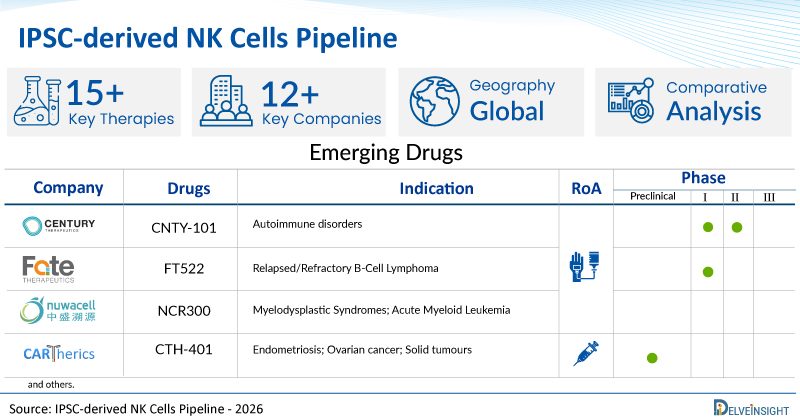
In a significant advancement for cancer treatment, over a dozen companies are actively developing induced pluripotent stem cell (iPSC)-derived natural killer (NK) cell therapies. According to DelveInsight's recent report, titled 'IPSC-derived NK Cells Pipeline Insight 2026', more than 15 iPSC-derived NK cell drugs are currently in various stages of clinical trials, signaling a promising future for these innovative treatments.
A Growing Clinical Trial Landscape
The landscape for iPSC-derived NK cell therapies is rapidly expanding, with at least 12 companies at the forefront of this groundbreaking research. Notable players in the field include Centuary Therapeutics (NASDAQ: IPSC), Cartherics Pty Ltd, and Fate Therapeutics (NASDAQ: FATE). These firms are exploring multiple drug candidates aimed at improving treatment outcomes for patients battling cancer.
DelveInsight's report provides an extensive overview of these pipeline therapies, highlighting that approximately three of the iPSC-derived NK cell drugs are in early development phases. This surge in clinical research reflects a broader trend towards harnessing the power of the immune system for cancer treatment, and it could lead to significant breakthroughs in therapeutic options.
Understanding iPSC-Derived NK Cells
Induced pluripotent stem cells offer a unique advantage in the development of NK cell therapies. These cells are generated by reprogramming human somatic cells, allowing researchers to create a renewable and standardized source of NK cells. Unlike traditional donor-derived NK cells, iPSC-derived variants can be engineered to enhance their tumor-targeting capabilities and resistance to the immunosuppressive environments often found in tumors.
This represents a shift in cancer treatment methodologies, as iPSC-derived NK cells retain their innate ability to recognize and eliminate virus-infected or malignant cells without prior sensitization. Their scalability and consistent performance make them an attractive option for future cancer immunotherapies.
Key Players and Promising Drug Candidates
As the clinical trial pipeline gains momentum, several promising drug candidates have emerged. CNTY-101, CTH-401, FT522, NCR300, and HC101a are a few examples of therapies currently in development. These drugs represent a diverse array of approaches to harnessing the immune system's power against cancer.
Companies like Nuwacell Biotechnologies Co., Ltd. and HebeCell are also making strides in this field, contributing to the growing body of research focused on iPSC-derived NK cells. The competitive landscape, as outlined in the DelveInsight report, showcases various clinical strategies and partnerships aimed at accelerating the development of these therapies.
Regulatory Pathways and Future Prospects
Understanding the regulatory landscape is crucial for the successful development of iPSC-derived NK cell therapies. The report sheds light on the processes involved with regulatory bodies such as the FDA and EMA, essential for bringing these innovative treatments to market. Companies are keenly focused on navigating these pathways, ensuring compliance while maximizing the potential for successful trials.
As research progresses, the insights provided by DelveInsight allow stakeholders to make informed decisions regarding their development strategies. With the current momentum, it's likely that iPSC-derived NK cell therapies will play a vital role in future cancer treatment paradigms.
The ongoing trials represent a significant step forward in the fight against cancer, with the potential to transform patient care. As more companies join the fray and clinical data accumulate, the next few years may witness breakthroughs that could redefine therapeutic options for patients worldwide. The promise of iPSC-derived NK cells is not just a fleeting trend; it signifies a pivotal moment in the evolution of cancer immunotherapy.