
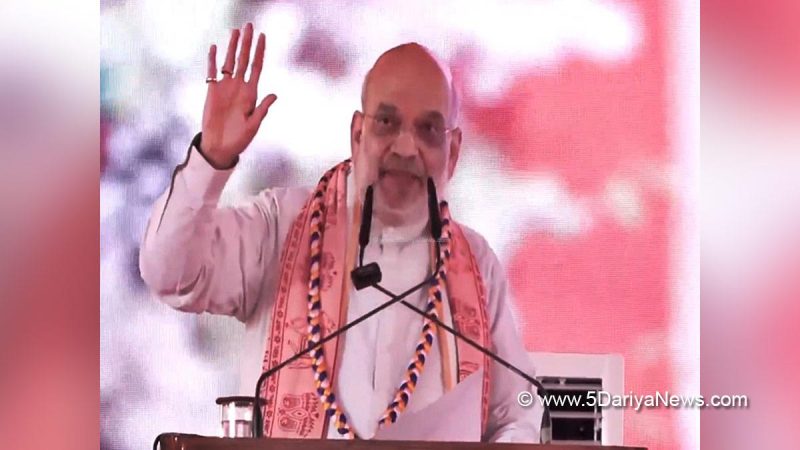
Union Home Minister Amit Shah attended a significant religious event at the International Society for Krishna Consciousness (ISKCON) temple in Mayapur, West Bengal, on Wednesday. He emphasized that his presence was as a devotee of Shri Chaitanya Mahaprabhu rather than in his official capacity. This gathering marked the 152nd holy appearance day of Bhaktisiddhanta Sarasvati, a prominent 19th-century Vaishnav revivalist.
Shah's Personal Commitment to Faith
During the event, Shah expressed his deep appreciation for Bhaktisiddhanta Sarasvati's contributions to the Vaishnav faith. He underscored the importance of spirituality in one's life, stating that he was there purely as a follower, highlighting the personal nature of his visit. His remarks resonated with many attendees, who came to celebrate the teachings of the revered figure known for his efforts in reviving and spreading the principles of Gaudiya Vaishnavism.
As the Home Minister, Shah carries a significant public profile, yet on this occasion, he made a conscious decision to separate his political identity from his spiritual commitments. This approach is particularly noteworthy given the current political climate in India, where the intersection of religion and politics often creates complex narratives. By choosing to focus on his devotion, Shah aimed to foster a sense of unity among devotees without the distractions of political discourse.
A Celebration of Bhaktisiddhanta Sarasvati
The event celebrated the legacy of Bhaktisiddhanta Sarasvati, who founded the Gaudiya Math and played a crucial role in the spread of Krishna consciousness in the early 20th century. His teachings emphasized the importance of chanting the holy names of God and living a life centered around spiritual principles. His followers regard his appearance day as a time for reflection on his teachings and their relevance in modern society.
Shah's attendance at such a significant religious event illustrates the Indian government's acknowledgment of the vital role spirituality plays in the cultural and social fabric of the nation. The gathering attracted followers from various parts of India and abroad, all united in their reverence for Bhaktisiddhanta Sarasvati. This large turnout indicates the enduring influence of his teachings and the strong community bonds within the ISKCON movement.
The Role of Religion in Indian Politics
While Shah opted to refrain from political commentary during the event, his presence cannot be completely divorced from the larger political context. Religion often shapes political landscapes in India, with various parties vying for the support of religious communities. Shah's decision to attend as a devotee highlights a careful navigation of this delicate terrain.
Historically, the Bharatiya Janata Party (BJP), to which Shah belongs, has positioned itself as a proponent of Hindu nationalism. However, Shah's attendance at the ISKCON event suggests a nuanced approach, recognizing the significance of religious gatherings as a means to foster goodwill and community engagement. It reflects an understanding that, while politics and religion can intertwine, moments of pure spirituality can transcend political agendas.
Community Response and Future Implications
Attendees expressed appreciation for Shah's humble approach, noting that his presence as a devotee rather than a political leader was refreshing. Many commented that it allowed for a genuine celebration of faith without the usual political undertones. This response could signal a desire among the public for leaders to engage with spirituality on a more personal level, rather than solely through the lens of governance.
As India continues to grapple with the complexities of its diverse religious landscape, Shah's actions may inspire other political figures to adopt similar approaches. Engaging with spiritual communities authentically could foster greater trust and collaboration between the government and its citizens. This event stands as a reminder of the potential for spirituality to bridge divides in a nation characterized by its multifaceted identities.
In the wake of this gathering, it will be interesting to see how Shah and other political leaders balance their public roles with personal beliefs. The blending of spirituality and politics remains a significant aspect of Indian society, and leaders who can navigate this landscape thoughtfully may find themselves resonating deeply with the electorate.