
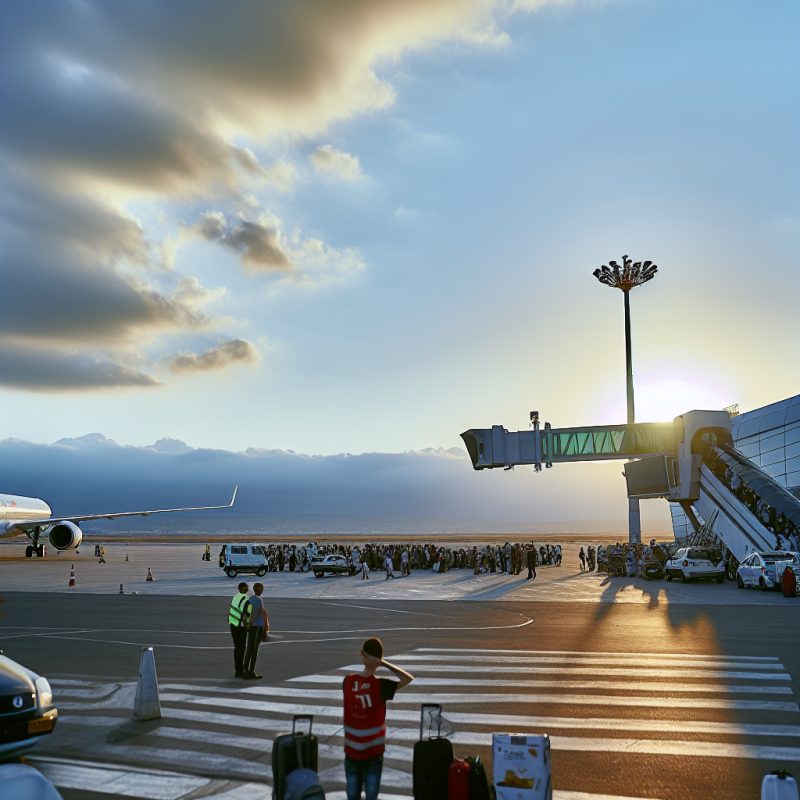
Flight cancellations are wreaking havoc on travel plans as Escalating Tensions in the Middle East lead to widespread airspace closures. Following coordinated strikes by the U.S. and Israel against Iranian targets, hundreds of thousands of travelers find themselves stranded or diverted from their intended destinations.
On March 1, 2026, reports surfaced of significant military actions in Iran, prompting immediate travel warnings from various countries. The U.S. and Israeli forces targeted key military installations in Iran, which resulted in retaliatory strikes. As a precaution, multiple airlines halted operations, leading to chaos at numerous airports throughout the region. Photographs shared on social media depict long lines of frustrated passengers grappling with canceled flights and limited information. Originally reported by BBC.
Travel Warnings and Airspace Closures
Governments around the world swiftly issued travel advisories, urging citizens to avoid non-essential travel to the Middle East. The U.S. State Department specifically cautioned against travel to Iran and surrounding areas, highlighting the risks posed by ongoing military operations. Additionally, several countries, including the UK and Canada, echoed similar sentiments, further complicating the travel landscape.
As the situation escalated, air traffic in and out of the Middle East faced unprecedented disruptions. Major airlines, including Delta Air Lines, Emirates, and British Airways, announced the suspension of flights to affected regions. Travelers were left scrambling to find alternative routes, with many flights already booked for the upcoming holiday season. The International Air Transport Association (IATA) reported a staggering number of canceled flights, with estimates suggesting that hundreds of thousands of passengers could be impacted.
Stranded Passengers Face Uncertainty
At major international airports, scenes of confusion and frustration unfolded as passengers grappled with the fallout from the unrest. Reports indicated that travelers at key hubs, such as London Heathrow and Dubai International, faced long waits and limited options for rebooking flights. Many airlines struggled to accommodate the sudden influx of inquiries, leading to extended wait times on customer service lines.
One traveler, Sarah Thompson, expressed her frustration: "I was supposed to fly to Tehran for a family wedding, but now I'm stuck here with no clear answers. The airline hasn't provided any updates, and I feel completely lost." Stories like Thompson's have become common as the situation unfolds, with many passengers left unsure of when or if they'll reach their destinations.
Economic Implications of the Conflict
The ramifications of the conflict extend beyond individual travelers, as the aviation industry braces for significant economic fallout. Analysts predict that the cancellation of flights and the resulting decrease in travel demand could lead to substantial losses for airlines. The IATA has already warned of potential revenue declines, estimating that the disruptions could cost the global aviation industry billions in lost ticket sales.
In response to the crisis, some airlines are exploring alternative routes that bypass the affected airspace. However, these detours often lead to longer travel times and increased costs for passengers. For example, flights that typically take around 8 hours may now require additional layovers, pushing travel durations to 12 hours or more. The increased operational costs may ultimately be passed on to consumers, further complicating the financial landscape for air travelers.
As tensions simmer, the global community watches closely. The potential for further escalation in the region raises concerns for both safety and stability in international travel. Travelers planning trips in the coming weeks are advised to stay informed and consider flexible booking options to navigate the uncertainty.
Looking ahead, the aviation industry is gearing up to adapt to the evolving situation in the Middle East. Airlines are expected to implement contingency plans, including enhanced safety protocols and alternative routing strategies. However, with the geopolitical climate remaining volatile, the path to normalcy in air travel may be longer than anticipated.
Originally reported by BBC. View original.