
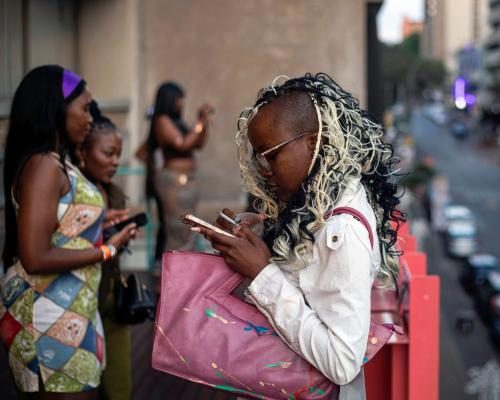
When it comes to urgent action needed to prevent surge in digital violence in africa, experts say, activists and legal experts across Africa are sounding the alarm over a disturbing rise in digital violence, particularly affecting women and youth on the continent. The rapid increase in internet access, combined with a youthful demographic-over 70% of sub-Saharan Africa's population is under 30-has created fertile ground for gendered online violence. Ayesha Mago, global advocacy director at the Sexual Violence Research Initiative, emphasized the perilous intersection of online and offline worlds. "Unfortunately the world offline is not safe, equal and inclusive. But the world online is proliferating that to such an extent that it's creating a foundation for a very, very unequal future," she said.
Understanding Urgent Action Needed To Prevent Surge In Digital Violence In Africa, Experts Say
As internet connectivity expands across Africa, the number of individuals experiencing online violence is expected to rise significantly. A study across five countries in sub-Saharan Africa found that 28% of women reported encountering online violence. Despite only 38% of the continent's population being internet users-31% among women-these figures illustrate a worrying trend, particularly as more young people engage with technology. Digital violence against women and girls manifests in numerous harmful ways, leading to mental health issues and withdrawal from social and economic participation. This can escalate to physical attacks, especially against LGBTQI+ individuals in nations where homosexuality is criminalized. Originally reported by The Guardian.
Research conducted by the Centre for Information Resilience (CIR) in Ethiopia highlights the normalization of gendered abuse online. An Ethiopian woman interviewed by the CIR stated, "No platform feels safe." The study revealed that while men are often attacked for their ideas, women face misogynistic abuse linked to their appearance and societal roles, raising the risk of real-life violence.
Alarming Statistics from Across the Continent
Statistics from Uganda and South Africa underline the severity of the situation. In 2021, a National Survey on Violence in Uganda noted that 49% of women experienced online harassment. Upcoming research by Equimundo and UN Women in South Africa indicates that exposure to harmful content makes men 2.6 times more likely to commit violence and 1.8 times more likely to hold misogynistic views. Women, particularly those in the political sphere, human rights activists, and journalists, are prime targets for this escalating trend.
A report by the Inter-Parliamentary Union and the African Parliamentary Union found that 46% of female parliamentarians across 50 African countries had faced sexist attacks online, with 42% receiving threats of death, rape, or abduction through social media. A separate UN Women report from Kenya cited name-calling and blackmail aimed at discrediting women in politics, exacerbating fears of violence during campaign activities.
Legislative Gaps and Opportunities for Change
Globally, nearly two in five women encounter tech-facilitated violence, with 85% of women online witnessing or encountering abuse. However, fewer than 40% of countries have laws in place to protect women from cyber harassment, leaving a staggering 1.8 billion women and girls without legal recourse. In Africa, only 17 countries have introduced legislation addressing cybercrime, with South Africa's Domestic Violence Amendment Act often cited as a positive model. This law empowers courts to order the removal of abusive content from digital platforms.
However, Mago points out that many existing laws fail to recognize the gendered nature of online abuse, which is crucial for effective protection. "Most [laws] don't acknowledge the gendered nature of abuse," she explained. To truly protect vulnerable communities, legislation must explicitly address online gendered violence.
Urgency in Addressing Digital Violence
The alarming rise of digital violence in Africa reflects a broader societal issue that requires immediate attention. Activists and legal experts insist that both online and offline environments must prioritize safety and equality. As the continent continues to embrace digital technology, it is imperative to establish robust legal frameworks that protect individuals, particularly women and youth, from harassment and violence.
In a world where the online experience can exacerbate existing inequalities, the call for urgent action resonates louder than ever. Without swift and effective measures, the risk of a deeply unequal future looms large in Africa, threatening the safety and rights of millions. As discussions around digital violence gain momentum, the hope is for a collective response that prioritizes human dignity and security for all.
Originally reported by The Guardian. View original.