
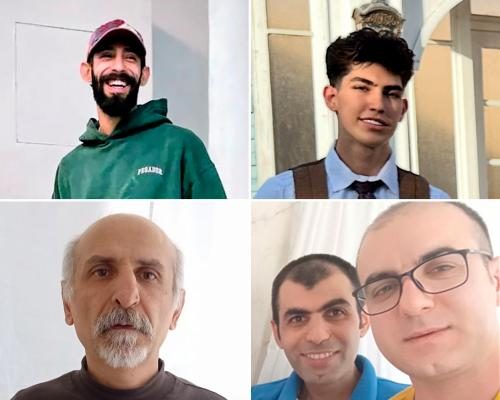
In a chilling reminder of the Iranian regime's brutal crackdown on dissent, reports indicate a significant rise in executions, coinciding with international tensions. The case of Peyvand Naimi, a 30-year-old man arrested amid January's mass protests, highlights the grim reality faced by many detainees. Naimi has been subjected to severe mistreatment, including solitary confinement and mock hangings, raising fears of imminent execution. As the world focuses on geopolitical issues, the Iranian authorities appear to be using the chaos as cover for their actions.
Protests and Brutal Repression
Peyvand Naimi was detained nearly three months ago during widespread protests that erupted in Iran in January. These demonstrations were sparked by a range of grievances, including economic hardship and political repression, and were met with a heavy-handed response from security forces. Naimi's family reports that he has endured harrowing conditions, including more than a month in solitary confinement, psychological torture, and starvation. His ordeal includes a forced confession broadcast on state television and accusations of celebrating the death of former Supreme Leader Ali Khamenei. Despite these allegations, his family insists he is innocent and has not been formally charged. Originally reported by The Guardian.
"My whole body was shaking when I heard about the torture he has endured," said Zahra Hosseini*, a relative of Naimi. "It's unbelievable. I am very worried." Naimi's situation is far from unique, as many others arrested during the protests face similar threats of execution.
Rising Executions Amid Inattention
According to Iran Human Rights, at least 145 confirmed executions have occurred in 2026, with over 400 additional executions reported but not verified. This alarming trend coincides with the ongoing conflict involving the U.S. and Israel, which many observers believe has overshadowed human rights violations in Iran. Earlier this month, the Iranian regime executed three men publicly, including 19-year-old wrestling star Saleh Mohammadi, who was convicted of moharebeh, or waging war against God. Additionally, Kourosh Keyvani, a dual Swedish-Iranian national, was executed for allegedly spying for Israel.
The Iranian authorities appear to be using executions as a tool to instill fear among the population. Many death sentences are communicated solely to the accused and their families, with little to no transparency. Families of detainees are often warned against speaking out, creating a culture of silence and despair.
The Role of International Attention
As international focus shifts towards oil prices and geopolitical conflicts, human rights advocates express concern that the surge in executions is likely to go unnoticed. Mahmood Amiry-Moghaddam, director of Iran Human Rights, stated, "We are concerned that these executions and human rights violations are overshadowed by the war. Right now, everyone is thinking about oil prices, and because of that, the political cost of these executions is very low." This sentiment underscores the troubling reality that the Iranian regime may exploit global distractions to continue its oppressive policies.
In Isfahan, 18-year-old Shervin Bagherian Jabali's family learned of his death sentence through a state media broadcast. Jabali was reportedly subjected to three mock executions in an attempt to force a confession regarding the deaths of security agents. His chilling interaction with his interrogator highlights the brutal tactics employed by the regime to extract confessions and maintain control.
Escalating Human Rights Violations
Reports indicate that the Iranian government has increasingly weaponized the death penalty since the 2022 Woman, Life, Freedom uprising. Amnesty International's Mansoureh Mills stated that the state uses executions as a means to suppress dissent and instill fear among the populace. This year alone, there have been numerous instances of executions following grossly unfair trials that often involve forced confessions extracted under duress.
In the latest wave of executions, two political prisoners, Mohammad Taghavi, 59, and Akbar Daneshvarkar, 60, were executed for baghi (armed rebellion against the state) after being convicted in a trial marred by allegations of torture. The National Council of Resistance of Iran reported that Babak Alipour, 34, and Pouya Ghobadi, 33, were executed for their alleged affiliation with the People's Mujahideen of Iran, an exiled opposition group.
As the Iranian regime continues to silence dissent, the international community faces a critical challenge in addressing these human rights violations. The enduring plight of individuals like Peyvand Naimi serves as a stark reminder of the urgent need for global attention and advocacy against such oppressive measures.
Originally reported by The Guardian. View original.