
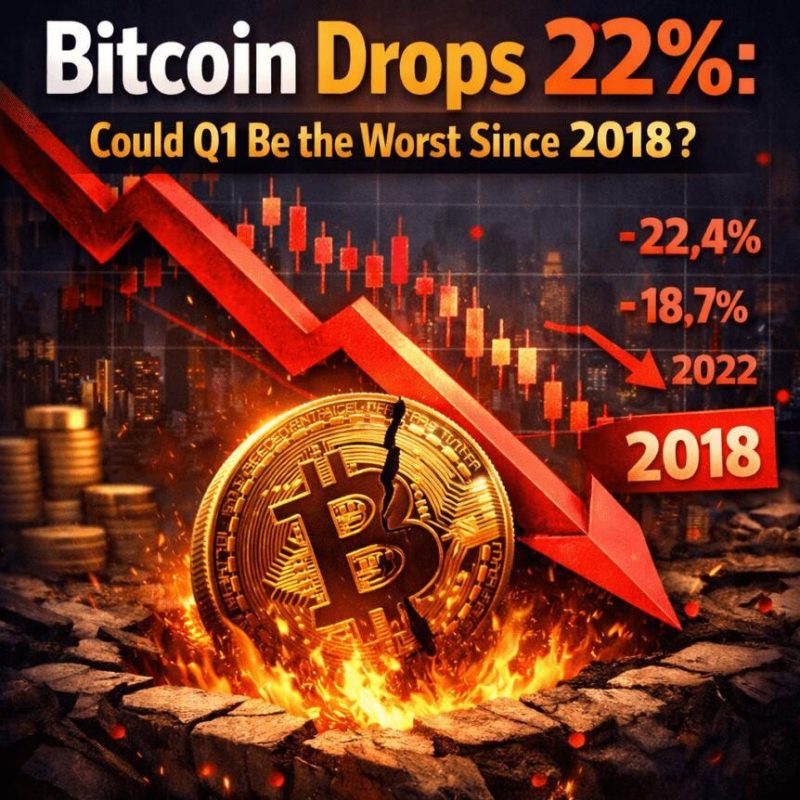
Bitcoin (CRYPTO: BTC) has begun 2026 with a dramatic decline, dropping 22% in just a few days. As the largest cryptocurrency by market capitalization faces this downturn, analysts are speculating whether the first quarter may mirror the bleak performance seen in 2018. With Bitcoin currently trading around $25,000, many investors are on edge, recalling the tumultuous bear market that characterized the cryptocurrency landscape several years ago.
Historical Patterns Resurface Amid Market Turmoil
The recent price drop for Bitcoin is not an isolated incident; it has raised concerns reminiscent of previous bear markets. As of early January 2026, Bitcoin sits at a stark $25,000, a significant decline from its peak of $69,000 in November 2021. Such fluctuations are characteristic of the digital currency market, which is known for its volatility.
In 2018, Bitcoin faced one of its most challenging periods, witnessing a staggering decline of nearly 75% from its peak, which investors hope to avoid this time around. Market analysts are closely monitoring the current downward trend, as it suggests that the first quarter of 2026 could be one of the worst quarters for Bitcoin since that infamous year. The similarities between now and then are striking, and they evoke a sense of caution among traders and holders alike.
Investor Sentiment Deteriorates Amid Price Fluctuations
The sentiment among Bitcoin investors has started to shift as the price continues to spiral downwards. Many are expressing anxiety over the sustainability of their investments, and some are contemplating liquidating their holdings to minimize losses. The current market dynamics are triggering widespread fear, uncertainty, and doubt (FUD) within the community.
Moreover, external factors contribute to the deteriorating investor sentiment. Regulatory scrutiny is increasing globally, with governments and financial institutions closely examining the cryptocurrency market. This heightened regulatory environment can create additional pressure on prices and lead to further declines. In particular, recent discussions in the United States about stricter regulations have left many investors wary of potential repercussions on Bitcoin and other digital assets.
Technical Indicators Signal Increased Volatility
Technical analysis of Bitcoin's price movements reveals indicators of heightened volatility ahead. Key resistance levels are being closely watched, and if Bitcoin fails to rebound and stay above critical support levels, further declines could be imminent. Analysts note that the $25,000 mark is a pivotal point; a drop below this threshold may trigger a cascade of selling, pushing the price down even further.
Additionally, trading volume has ramped up as traders respond to the volatility with increased activity. The market's reaction to Bitcoin's price movements has been swift, with many shorting the asset in anticipation of further declines. This behavior is not uncommon in bearish markets, but it adds an extra layer of uncertainty for long-term investors who hope for a recovery.
Comparing Current Trends to Past Market Crashes
Looking back at previous downturns, Bitcoin's current trajectory raises alarm bells for many market participants. The similarities between 2018 and now are not lost on investors. Back then, Bitcoin's rapid rise was followed by a brutal correction, leading to a prolonged bear market that lasted for years.
Many are questioning whether the cryptocurrency can withstand another severe market contraction. The first quarter of 2026 may serve as a critical juncture, as traders assess whether Bitcoin can reclaim stability or if it will continue its downward spiral. The psychological impact on investors cannot be overstated; fear of missing out on potential gains clashes with the fear of incurring steep losses.
As Bitcoin navigates through this tumultuous start to the year, market watchers will be keenly observing indicators that could signal a turnaround or further decline. The next few weeks will be crucial for determining whether 2026 will be a year of recovery or one that echoes the painful lessons of past market crashes. With each passing day, the volatility of Bitcoin emphasizes the necessity for caution and strategic planning among its holders, as all eyes remain fixed on the unfolding narrative of this ever-evolving digital asset.