
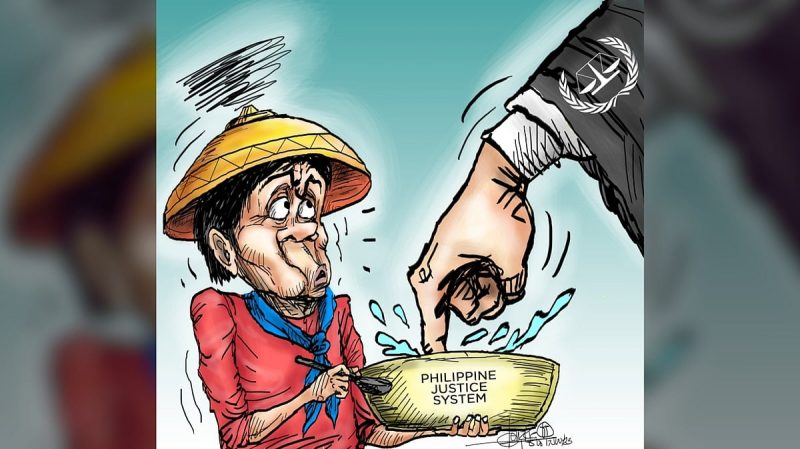
The ongoing clash between the International Criminal Court (ICC) and the Philippines escalates as former President Rodrigo Duterte's legal team contests the court's jurisdiction. This dispute follows the country's withdrawal from the Rome Statute in 2019, stirring sovereignty and political tensions within the Marcos administration and the Senate.
Recently, the ICC released a Document Containing the Charges (DCC), exposing the names of alleged co-perpetrators linked to Duterte's controversial drug war. This disclosure has intensified scrutiny on Senators Ronald "Bato" dela Rosa and Christopher "Bong" Go, both pivotal figures in the Senate and former allies of Duterte. The ICC's actions are perceived as an infringement on the Philippines' sovereignty, raising questions about the court's authority to prosecute domestic officials.
Withdrawal from the Rome Statute: A Key Turning Point
The Philippines ratified the Rome Statute in 2011 but officially withdrew on March 17, 2018. The withdrawal became effective one year later, leading to the current legal quagmire. Duterte's defense asserts that the ICC's jurisdiction has lapsed, arguing that the court does not possess the legal authority to prosecute any Philippine officials after the withdrawal. According to Article 127(2) of the Rome Statute, withdrawal does not affect cooperation with the ICC regarding criminal investigations initiated before the withdrawal date.
However, critics argue that the ICC's Pre-Trial Chamber (PTC) authorized a formal investigation into Duterte's actions on September 15, 2021-over two years after the Philippines had exited the Rome Statute. This timeline raises significant legal questions, as the alleged crimes occurred during Duterte's tenure as mayor of Davao City and later as president. International law experts believe that the ICC has forfeited its jurisdiction due to the prosecutor's failure to seek necessary authorization while the Philippines was still a member state.
Political Pressures Mount as ICC Targets Senators
The recent ICC disclosure has heightened political tensions within the Marcos administration. Senators dela Rosa and Go are under immense pressure as their names appear in connection with the ICC's investigation. Their political futures are now intertwined with the court's proceedings, leaving the Senate's balance of power vulnerable. The ICC's actions are viewed as a direct challenge to the Marcos administration's authority, complicating the already precarious political landscape.
Supporters of Duterte argue that the ICC's move to name Philippine officials undermines national sovereignty and is driven by political motives. The defense team maintains that the ICC is overstepping its bounds and interfering in domestic matters. As the investigation unfolds, the Marcos administration faces a critical test of its ability to navigate both legal and political challenges posed by international scrutiny.
Legal Opinions: Diverging Views on ICC Jurisdiction
Legal experts have expressed differing opinions on the ICC's jurisdiction over the Philippines. Some argue that the court's authority has lapsed due to the timing of the investigation's authorization, while others contend that the ICC retains the right to prosecute for crimes committed during the Philippines' membership. Dissenting opinions from ICC Judges Marc Perrin de Brichambaut and Gocha Lordkipanidze emphasize that the court cannot claim jurisdiction over the "Philippine situation" after the country's withdrawal.
Meanwhile, the Supreme Court of the Philippines has indicated that while the withdrawal does not erase obligations for crimes committed during membership, the country is no longer bound to enforce ICC decisions post-withdrawal. This ruling adds another layer of complexity to the ongoing dispute, as the Duterte administration's legal team continues to challenge the ICC's jurisdiction under Article 19(2) of the Rome Statute.
As the ICC investigation progresses, the political stakes for the Marcos administration and the named senators remain high. The interplay of legal arguments and political maneuvering will be pivotal in shaping the future of Philippine foreign relations and its domestic governance.
In the coming months, the legal battles surrounding the ICC's jurisdiction and the implications for Philippine sovereignty will likely continue to unfold. With both domestic and international ramifications, this dispute is set to not only influence the current administration but also shape the Philippines' standing on the global stage.