
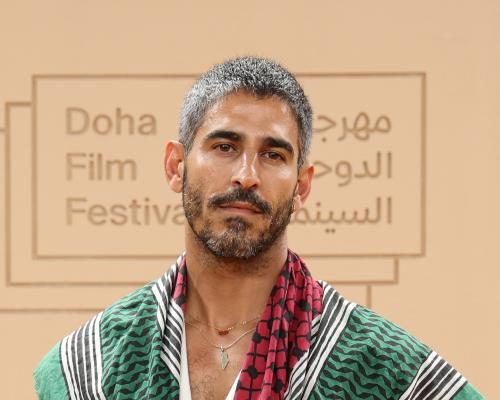
The recent detention of Ahmed Shihab-Eldin, a prominent journalist, has ignited serious concerns regarding press freedom in Kuwait and across the Middle East. Shihab-Eldin, a Kuwaiti national born in the U.S., was arrested on March 3 during a brief visit to Kuwait after sharing footage of a U.S. Air Force F-15E Strike Eagle crash in Al Jahra, located west of Kuwait City. This incident, which involved friendly fire, has prompted widespread fears about increasing censorship and a crackdown on freedom of speech amid geopolitical tensions fueled by the ongoing U.S.-Israel war with Iran.
Details Surrounding the Arrest
Ahmed Shihab-Eldin has established a distinguished career through his work with notable media outlets including PBS, HuffPost, and Al Jazeera English. He has been recognized for his journalism with awards from Amnesty International and the British Journalism Awards. On his Substack, Shihab-Eldin reported that the pilot and weapons officer of the crashed F-15E had successfully ejected and survived, with local residents seen assisting the crew in a civilian truck. This incident follows a friendly fire event on March 2, where three U.S. aircraft were shot down by Kuwait's air defenses, miraculously avoiding fatalities among the pilots. Originally reported by The Guardian.
In light of his arrest, there is mounting concern among human rights advocates that Shihab-Eldin may face charges under newly implemented security laws in Kuwait. These laws, perceived as a means to suppress dissent, have led to the arbitrary detention of numerous citizens, transforming Kuwait from a relatively free society into a repressive state.
Concerns Over New Security Legislation
The Kuwaiti government is reportedly utilizing anti-terrorism laws to stifle discussions surrounding military incidents, including attacks on its infrastructure. Recent legislation has redefined terrorism to include actions deemed to endanger national security, effectively giving authorities broad discretion to target journalists and activists. Sara Qudah, the Committee to Protect Journalists (CPJ) Middle East regional director, stated, "We are seeing escalating censorship of journalists and news outlets across the world in relation to the Iran war, including in the Gulf. National security is being used as a pretext to crack down on freedom of speech and Shihab-Eldin's detention is emblematic of that. He must be freed immediately."
Furthermore, a proposed law threatens significant fines and prison sentences for anyone publishing or disseminating false information regarding military entities. This move raises alarming questions about the future of press freedoms in Kuwait and the broader region.
International Reactions and Calls for Action
The international community is closely monitoring the situation, with calls for the release of Shihab-Eldin and other detained journalists intensifying. Ashish Prashar, a former adviser to the Middle East peace envoy, emphasized the severity of the situation, stating that to imprison a journalist arbitrarily and label their work as terrorism is a grave misstep. He urged both the U.S. State Department and the U.K. Foreign Office to advocate for the release of all media workers detained in the Gulf, warning that failure to act would indicate an abandonment of ethical obligations and an endorsement of authoritarian practices.
The Gulf Centre for Human Rights has similarly reported a pattern of arbitrary arrests in Kuwait, indicating a systematic campaign to repress dissent. These actions contribute to an environment where expressing differing opinions has become dangerous, with citizenship laws being misused to expel perceived dissidents.
Kuwait's Balancing Act Amid Geopolitical Tensions
Kuwait's government faces a challenging balancing act as it navigates regional tensions, particularly in light of its opposition to Israel's military actions in Gaza. Sheikh Meshal al-Ahmad al-Jaber Al Sabah, the Emir of Kuwait, reiterated the nation's stance, asserting, "We have not allowed our land, our skies, or our shores to be used for any military activity against [Iran]." Despite these assurances, conflicting reports and videos have surfaced, allegedly depicting missile launches from Kuwaiti territory into Iran. Such contradictions further complicate Kuwait's position and its handling of internal dissent.
The situation remains fluid, especially following attacks from Iran on Kuwaiti infrastructure, including a crude oil tanker and other critical facilities. As tensions escalate, the implications for freedom of speech and the safety of journalists in Kuwait are increasingly precarious.
As the international community watches closely, the fate of Ahmed Shihab-Eldin may serve as a litmus test for press freedom in Kuwait and the Gulf at large. His case underscores the need for vigilance against rising authoritarianism in the region and the critical importance of protecting journalists who dare to report the truth.
Originally reported by The Guardian. View original.