
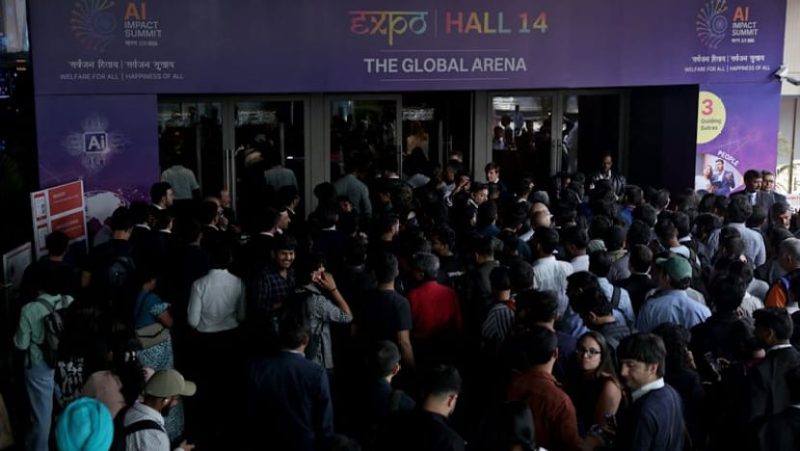
The AI Impact Summit in New Delhi kicked off on February 16 amidst significant organizational challenges, with attendees facing long queues, overcrowding, and confusion over entry procedures. This event, designed to highlight India's ambitions in artificial intelligence, drew criticism as delegates expressed frustration over the event's management and logistics.
Long Waits and Overcrowding Dampen Enthusiasm
As the doors opened for the highly anticipated AI Impact Summit, a wave of disappointment swept through the venue at Bharat Mandapam. Delegates reported waiting in lengthy queues that snaked around the entrance, causing many to miss the start of sessions. With an expected attendance of around 250,000 people, the crowd management clearly fell short of expectations.
Attendees shared their experiences on social media, where complaints about overcrowding and poor signage became a common theme. Many reported feeling lost due to a lack of clear directions, which added to the frustration as they attempted to navigate the venue. The disarray left some delegates scrambling to secure their belongings after the exhibition hall was abruptly cleared for security sweeps ahead of high-profile arrivals.
Uncertainty Surrounds Sessions and Agendas
The confusion extended beyond entry procedures, with some speakers still awaiting confirmation of their participation in scheduled panels. Reports surfaced of unclear communication regarding session agendas, leading to uncertainty about where and when discussions would take place. This lack of clarity left participants feeling unprepared and concerned about the potential impact on the summit's objectives.
Moreover, the inadequate seating arrangements added to the chaos, as many attendees found themselves unable to enter sessions due to capacity limits. With high-profile discussions on the future of AI and its governance, the organizational lapses at such a significant event drew attention to the need for more effective planning and execution.
Government's Message at Risk Amid Disarray
For Prime Minister Narendra Modi's administration, the mishaps at this international event posed a risk that extended beyond mere optics. The AI Impact Summit is positioned as a platform to elevate the voices of developing nations in the global AI dialogue. However, the organizational issues threaten to overshadow the government's messaging about India's technological capabilities.
This summit marks a significant milestone, being the first of its kind hosted in the developing world. Indian officials aimed to use this opportunity to showcase the country's advancements in technology and its commitment to shaping global AI governance. Yet, the initial impressions created by the disorganization could undermine these ambitions.
Media Frustrations Mirror Attendee Experiences
Journalists covering the summit reported similar frustrations. Many spent much of the opening day clarifying entry procedures, struggling with the confusion between digital QR codes and physical passes. Some reporters noted that the physical passes promised for collection were not available, and a lack of seating hindered their ability to file stories or conduct interviews.
As the day progressed, the mounting dissatisfaction among both attendees and media personnel underscored the need for better logistical arrangements. With the summit scheduled to run until February 20, the pressure is on organizers to rectify the issues and restore confidence among participants and stakeholders.
The AI Impact Summit is intended to highlight India's position in the global technology landscape, but the disarray on its opening day calls into question the effectiveness of its execution. As the event continues, it remains to be seen whether organizers can address the logistical challenges and deliver on the summit's promise of advancing global AI governance.