
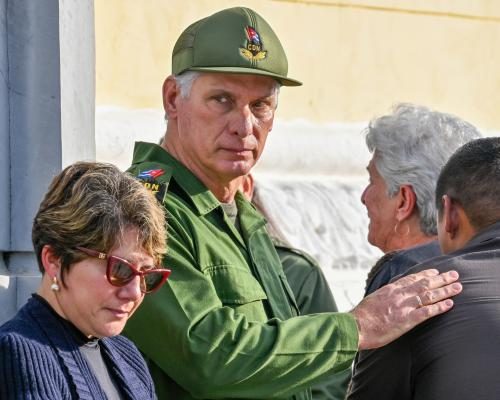
Cuban President Miguel Diaz-Canel has made a bold declaration in his first television interview with an American outlet, asserting he will not resign under U.S. pressure. Speaking to NBC News, Diaz-Canel emphasized Cuba's autonomy and defiance against U.S. policies that he described as hostile. He stated, "We have a free sovereign state, a free state. We have self-determination and independence, and we are not subjected to the designs of the United States."
Diaz-Canel, who has been in office since 2018, criticized the U.S. government for its long-standing embargo against Cuba, arguing that it lacks the moral authority to demand any concessions from the island nation. His remarks come amid rising tensions between Washington and Havana, particularly as the U.S. has intensified its economic pressure on the communist-ruled island. Originally reported by The Guardian.
Economic Pressures and Energy Crisis
The Cuban economy is facing significant challenges, primarily due to a near-total oil blockade imposed by the U.S. government. This blockade has severely restricted Cuba's ability to import oil, which has been further exacerbated by a cut in supplies from Venezuela, its primary energy partner. Since January, when the U.S. seized control of Venezuelan leader Nicolás Maduro's assets, Cuba has struggled to secure the necessary oil for its energy needs.
Currently, Cuba produces only about 40 percent of its fuel requirements, making it heavily reliant on imports. The situation reached a critical point earlier this year when the U.S. threatened tariffs on nations that export oil to Cuba, effectively stifling the island's energy imports. The U.S. administration under Donald Trump had previously expressed contempt for Cuba's leadership, labeling it a national security threat.
Russia's Commitment to Cuba
Amid these mounting pressures, Russia has reiterated its support for Cuba. During a visit to the island on Thursday, Russian Deputy Foreign Minister Sergei Ryabkov held talks with Diaz-Canel, emphasizing that Moscow would not abandon its ally. Ryabkov stated, "We cannot betray Cuba. That is out of the question. We cannot leave it on its own." His comments underscore a commitment to maintaining strong ties with Cuba, particularly in light of the ongoing U.S. blockade.
Earlier in March, Russia delivered a significant shipment of oil to Cuba via the tanker Anatoly Kolodkin, which carried 730,000 barrels of crude. This delivery marked the first oil shipment to the island in three months, signaling Russia's willingness to assist Cuba despite U.S. threats. Ryabkov assured that Russia's support would extend beyond this initial shipment, indicating a long-term commitment to helping Cuba navigate its current challenges.
International Relations and Future Implications
The situation in Cuba has broader geopolitical implications, especially regarding the relationships between Russia, the U.S., and Latin America. Ryabkov's visit to Cuba and his assurances of support reflect Russia's strategic interests in the region, positioning itself as a counterbalance to U.S. influence. He remarked, "I am certain that the events of recent weeks in our relations will have us moving forward to find solutions to the toughest problems.. emerging from the illegal and absolutely unacceptable blockade of the island by the U.S."
The U.S. has consistently viewed Cuba as a potential threat, and Trump's administration had previously stated that Cuban leadership is corrupt and ineffective. However, Diaz-Canel's refusal to step down in the face of U.S. pressure may embolden the Cuban government, as they seek to strengthen ties with allies like Russia.
As the U.S. continues to impose sanctions, the resilience of Cuba's leadership will be tested. The statements from both Diaz-Canel and Ryabkov suggest a firm resolve to withstand external pressures. The future of U.S.-Cuba relations remains uncertain, but the commitment shown by Russia could significantly impact the dynamics in the region.
Originally reported by The Guardian. View original.