
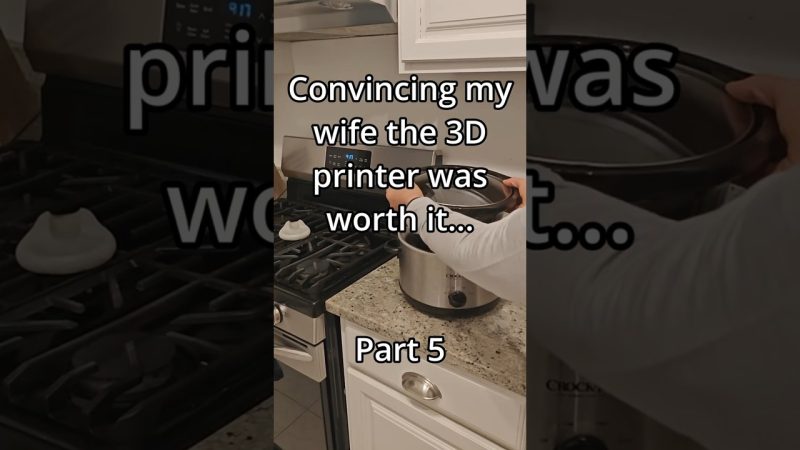
When a mishap left his wife's crockpot lid damaged, one DIY enthusiast saw an opportunity to showcase the potential of his 3D printer. In Part 5 of his ongoing project, he didn't just replace the broken handle; he designed an upgraded version that enhanced functionality and offered a creative solution to a common kitchen problem.
Turning a Mishap into Innovation
My wife had a tough day when she accidentally dropped the lid of her beloved crockpot, shattering its handle. While it was undoubtedly disappointing for her, I seized this moment to demonstrate the true value of my 3D printer. Instead of simply replicating the original part, I aimed to create an upgraded version that would prevent future accidents. Originally reported by Jake Ward.
Utilizing PETG plastic for its impressive heat resistance, I designed a custom handle that not only matches the aesthetics of the original but also enhances its functionality. Additionally, I incorporated an innovative "anti-roll" feature by modeling a flat top that keeps the lid securely in place when resting on the counter. This design choice minimizes the risk of accidents and adds a touch of practicality to the kitchen.
Advanced Printing Techniques Make a Difference
In this project, I decided to push the boundaries of traditional 3D printing by experimenting with a "pause-at-layer" technique. This method allowed me to integrate the original threaded insert directly into the new handle, ensuring a perfect fit and added durability. By locking the insert into place during the printing process, I eliminated the potential for misalignment, a common issue in DIY repairs.
The result was not only aesthetically pleasing but also structurally sound. The use of PETG lent strength to the handle, meaning it could withstand the rigors of everyday use. This level of customization is something that mass-produced parts can rarely achieve, and it reaffirmed my belief in the value of my 3D printer.
Thoughtful Additions Improve Usability
One of the most exciting features I added to the upgraded handle was a hidden clip designed specifically for a meat thermometer. This small yet thoughtful addition allows users to keep their thermometer conveniently stored and easily accessible, reducing clutter on the countertop. In a kitchen where space is often at a premium, solutions like this can make a significant difference.
By incorporating this clip, I've streamlined the cooking process, making it easier for my wife to focus on preparing delicious meals without worrying about misplaced tools. The design not only enhances functionality but also contributes to a cleaner and more organized kitchen environment.
Proving the Worth of 3D Printing
This latest project has been more than just a repair; it's been a testament to the capabilities of 3D printing technology. Each step of the process-from designing the handle to implementing advanced printing techniques-has underscored the versatility and potential of this technology in everyday applications.
For anyone skeptical about the value of investing in a 3D printer, my experience serves as a reminder of the endless possibilities. The ability to create custom parts tailored to specific needs can save time and money while also providing unique solutions that aren't available in stores. I'm proud to say that with each successful project, I'm transforming my workshop into a hub of innovation.
As I look ahead, I'm excited about the future projects that await. With the skills I've developed and the techniques I've learned, there's no telling what I can create next. The journey of proving my 3D printer's worth is far from over, and I'm eager to see how it continues to enhance our daily lives.
Originally reported by Jake Ward. View original.