
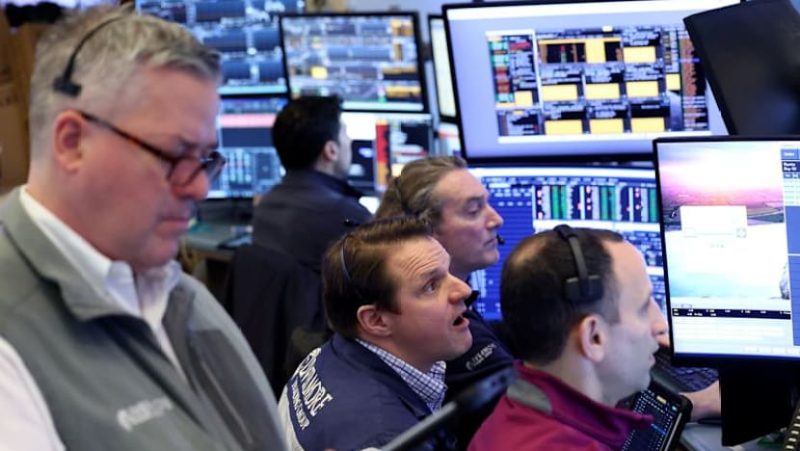
U.S. stocks experienced a notable rally on February 18, 2026, buoyed by positive movements in European markets and rising crude oil prices. All three major U.S. indexes closed higher after investors digested minutes from the Federal Reserve's latest policy meeting, while geopolitical tensions continued to influence market dynamics. The Dow Jones Industrial Average rose by 129.47 points, or 0.26%, to finish at 49,662.66. The S&P 500 added 38.10 points, or 0.56%, closing at 6,881.32, while the Nasdaq Composite climbed 175.25 points, or 0.78%, to end at 22,753.64.
European Markets Reach New Heights
European stocks also had a remarkable day, with the pan-European STOXX 600 index climbing 1.19% to close at a record high. The surge was driven largely by gains in defense and banking sectors, as investors reacted favorably to recent earnings reports and the prospect of a leadership transition at the European Central Bank (ECB). The broad FTSEurofirst 300 index saw a rise of 1.22%, adding 30.30 points to its value. Analysts suggest that the current leadership at the ECB, particularly under Christine Lagarde, has provided a stabilizing influence on the eurozone economy.
However, reports that Lagarde may depart from her role earlier than expected created some uncertainty in currency markets, causing the euro to weaken slightly. Ryan Detrick, chief market strategist at Carson Group, commented on the situation, stating, "Lagarde has been a calming voice, and it's been nice to have solid leadership in place. Potential rumors that she might be leaving a tad earlier have shaken up currency markets a little bit." Investors are now watching closely for the implications of such a leadership change on the ECB's monetary policy.
Geopolitical Tensions Drive Commodity Prices
Geopolitical developments have been a significant factor influencing market trends, particularly in the commodities sector. As peace negotiations regarding the ongoing conflict in Ukraine stalled, Ukrainian President Volodymyr Zelenskiy accused Russia of deliberately delaying progress toward a resolution. This uncertainty has led to increased volatility in global oil markets.
In addition to the Ukraine situation, Iran's recent decision to temporarily close parts of the Strait of Hormuz-a crucial global oil supply route-has heightened supply concerns. This combination of geopolitical factors has led to a noticeable increase in both oil and gold prices. Detrick remarked, "This double-whammy of continued geopolitical uncertainty has led to higher oil and higher gold prices." As a result, crude oil prices experienced a rebound, reflecting these supply worries and the ongoing tension in the region.
Federal Reserve Minutes Reveal Divergent Views
The latest minutes from the Federal Reserve's policy meeting highlighted a near-unanimous agreement among officials to maintain current interest rates. However, there remains a split regarding future monetary policy actions. While some members are advocating for a cautious approach, others are pushing for a more aggressive stance in response to inflation concerns. This divergence in views has left investors with a sense of uncertainty regarding the Fed's next moves.
As markets continue to react to these developments, the Fed's stance will be critical in shaping economic outlooks. The potential for interest rate adjustments could have far-reaching implications for both the stock markets and the broader economy. Investors are keenly aware that shifts in monetary policy could either bolster or hinder market momentum in the coming months.
In summary, the interplay between U.S. and European stock markets, alongside rising commodity prices amidst geopolitical tensions, has created a dynamic and complex trading environment. As investors remain vigilant and responsive to both economic indicators and geopolitical developments, the outlook for markets remains uncertain yet full of potential. The coming days will be telling as traders assess the implications of Fed policies and international tensions on their investment strategies.