
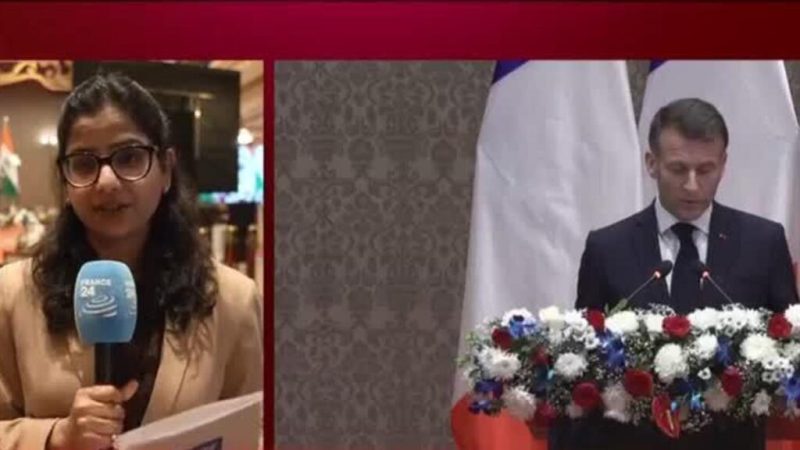
In a significant display of diplomatic camaraderie, French President Emmanuel Macron and Indian Prime Minister Narendra Modi convened in Mumbai on Tuesday to underscore the strengthening ties between their nations. Amidst global economic uncertainties exacerbated by U.S. tariff policies under former President Donald Trump, the leaders emphasized mutual benefits and future cooperation.
Macron and Modi: A Meeting of Minds
During their meeting, Macron and Modi engaged in discussions that spanned various sectors, from defense to technology, highlighting the importance of a collaborative approach in a changing global landscape. Prime Minister Modi expressed his appreciation for France's commitment to India's growth and development, particularly in areas such as renewable energy and infrastructure. The leaders noted that the bilateral trade between France and India has seen substantial growth, with figures reaching approximately $14 billion in 2022.
Macron, reflecting on the relationship, stated, "Our partnership is not just based on trade; it is a strategic alliance that is crucial for both our nations in these turbulent times." He further emphasized the importance of protecting shared values such as democracy and human rights. The two leaders also discussed joint ventures in the defense sector, with France being a key supplier of military hardware to India, including the Rafale fighter jets.
Economic Cooperation Amid Global Challenges
The meeting comes at a time of economic uncertainty influenced by shifting U.S. trade policies. The tariffs imposed by the Trump administration have created challenges for many countries, causing leaders like Macron and Modi to seek new avenues for economic collaboration. Both leaders acknowledged the need for diversifying trade partnerships to mitigate risks linked to external pressures.
Macron outlined potential areas for investment, particularly in India's burgeoning technology sector, where French companies have already made significant inroads. He noted, "India is emerging as a global tech hub, and we see immense opportunities for collaboration in innovation and research." Modi reciprocated, mentioning plans for joint tech initiatives that aim to harness the expertise of both nations to drive economic growth.
Defense and Security Collaboration
Another focal point of the discussions was defense and security cooperation, a cornerstone of Franco-Indian relations. Both leaders reiterated their commitment to enhancing military collaboration, particularly in the Indo-Pacific region. Modi highlighted the strategic importance of the partnership, stating, "In the face of rising tensions in various parts of the world, our defense collaboration is more vital than ever."
France has been a key partner for India in defense procurement, and both countries are exploring new avenues for joint military exercises and training programs. The leaders announced plans to expand collaboration on counter-terrorism, cyber security, and maritime security, recognizing the growing need for coordinated responses to global security challenges.
Future Prospects and Shared Goals
Looking ahead, Macron and Modi expressed optimism about the future of their bilateral relationship, emphasizing shared goals in climate change, sustainable development, and innovation. The leaders agreed to strengthen cooperation in renewable energy, with an emphasis on solar energy projects under the International Solar Alliance, which India spearheads.
As both nations navigate the complexities of a post-pandemic world, they aim to position themselves as leaders in tackling global challenges. Macron remarked on the importance of the partnership in addressing climate change, stating, "Our collective action is essential to combat this existential threat, and together, we can lead the way for others."
So, the meeting between Macron and Modi marks a pivotal moment for France-India relations, reinforcing their commitment to mutual growth and collaboration. As global dynamics continue to shift, the partnership between these two nations is poised to play a crucial role in shaping the future of international relations.