
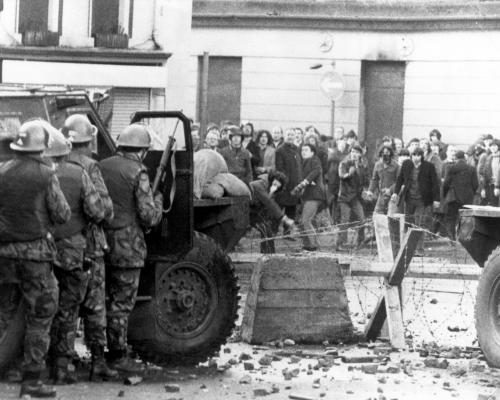
Kemi Badenoch has issued an apology after footage from the infamous Bloody Sunday incident was utilized in social media posts aimed at defending UK veterans. The Conservative leader stated on Saturday that the clip, which depicts British soldiers opening fire on unarmed civil rights demonstrators in Derry, was not approved by her and was distributed by inexperienced staff members. The controversial video was shared through Badenoch's social media platforms on Tuesday, depicting Labour's proposed amendments to legacy issues affecting veterans from the Troubles as detrimental.
Controversial Footage Sparks Outrage
The use of Bloody Sunday footage in political messaging has caused significant backlash. Colum Eastwood, the Social Democratic and Labour Party (SDLP) MP for Foyle, expressed his shock at the insensitivity of employing such a powerful historical moment to promote a political agenda. Eastwood condemned Badenoch's team for "trumpeting the service of British soldiers in Northern Ireland using footage from Bloody Sunday." The incident, which occurred on January 30, 1972, is regarded as one of the most tragic events in Northern Ireland's troubled history, resulting in the deaths of 13 unarmed civilians during an anti-internment march. Originally reported by The Guardian.
In total, 26 individuals were shot by members of the British Army's Parachute Regiment, with a 14th victim succumbing to injuries four months later. The day has become a pivotal point in the narrative of the Troubles, leading to increased support for the Irish Republican Army (IRA) and intensifying the conflict.
Badenoch's Response and Apology
During a visit to a south-east London hairdresser, Badenoch addressed the incident, stating, "I have apologised. I did not sign off the video." She explained that the content was linked to parliamentary discussions regarding Labour's legislation, which critics argue unfairly targets elderly veterans with potential legal actions over events that occurred decades ago, often under orders from political leaders who are no longer present. Badenoch emphasized her support for veterans, adding, "The video was done by very young people who did not recognise the footage as being from Bloody Sunday."
She further acknowledged that the video was taken down promptly once her party recognized the error. Badenoch's comments indicate a desire to clarify her position while addressing the missteps of her team.
The Political Context and Legacy Issues
This incident unfolds against the backdrop of Labour's Northern Ireland Troubles Bill, which aims to replace a previous law enacted by the last Conservative government. The earlier legislation included provisions that would allow veterans to evade prosecution for actions taken during the Troubles if they provided information about unresolved cases. However, this approach faced widespread condemnation from victims' groups and other political parties in Northern Ireland, leading to its classification as unlawful by a high court decision in Belfast in 2024.
Moreover, the Labour government is looking to remove restrictions on future inquests and civil actions that were previously halted under the former legislation. The only soldier charged in relation to the Bloody Sunday incident, known as Soldier F, was acquitted last year after a non-jury trial, further complicating the ongoing discourse surrounding accountability and justice regarding the events of the Troubles.
Historical Significance of Bloody Sunday
Bloody Sunday remains etched in the collective memory of both communities in Northern Ireland. The first inquiry into the shootings, led by Lord Widgery, controversially cleared the soldiers of wrongdoing, leading to widespread skepticism and anger. A subsequent inquiry, which reported in 2010, vindicated the victims' families' long-standing demands for justice. Former Conservative Prime Minister David Cameron, addressing the findings, characterized the events of Bloody Sunday as "unjustified and unjustifiable," acknowledging that some members of the armed forces acted improperly and that the government bore ultimate responsibility for their conduct.
The repercussions of Bloody Sunday extended beyond immediate grief; it reignited tensions and fueled recruitment for paramilitary groups like the IRA, illustrating the profound impact of state violence on the community. As discussions about legacy issues continue, the importance of sensitive and respectful dialogue surrounding such matters remains paramount.
Moving forward, the political landscape in Northern Ireland is likely to remain fraught with tension as the government grapples with how to address the legacy of the Troubles. As Badenoch's apology highlights, the need for careful consideration in political messaging surrounding such sensitive historical events is critical for fostering constructive dialogue and reconciliation.
Originally reported by The Guardian. View original.