
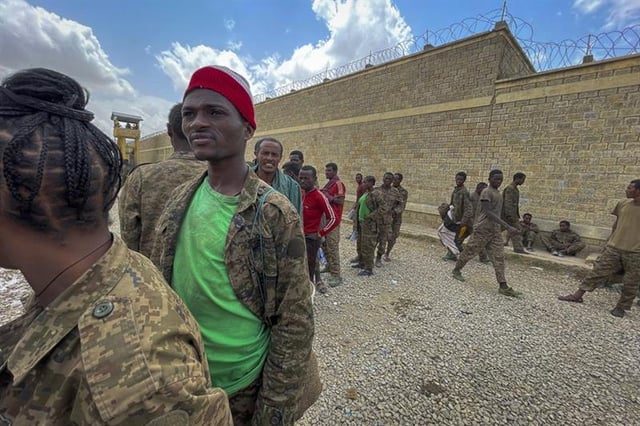
Ethiopia and Eritrea are inching closer to a potential military confrontation as both nations mobilize their armed forces along their shared border. This escalation comes amid rising tensions that have been brewing since the outbreak of hostilities in Ethiopia's Tigray region, with each government accusing the other of aggression. Reports indicate that thousands of troops have been deployed in recent days, raising alarms about a possible war.
Military Mobilization Intensifies Along the Border
In recent weeks, both Ethiopia and Eritrea have ramped up military activities near their 1,000-kilometer border. Ethiopian Prime Minister Abiy Ahmed stated that the nation is prepared to defend its sovereignty, while Eritrean President Isaias Afwerki has also signaled readiness for armed conflict. Eyewitness accounts suggest that heavy artillery and troop movements have been observed in border regions, particularly around the areas of Badme and Tsorona, long-standing points of contention between the two countries.
The mobilization follows a series of border skirmishes that have resulted in casualties on both sides. The Ethiopian National Defense Forces have reportedly increased their presence, while Eritrean forces are similarly bolstering their ranks. Analysts warn that the situation is highly volatile, with both nations on high alert for further provocations.
Historical Context of Ethiopia and Eritrea's Tensions
The relationship between Ethiopia and Eritrea has been fraught with conflict since Eritrea gained independence in 1993 after a lengthy struggle. A border war from 1998 to 2000 saw tens of thousands killed, and although a peace agreement was signed, tensions have remained simmering. The conflict in the Tigray region of Ethiopia, which erupted in November 2020, has added another layer of complexity to the already fragile relationship.
Recent events highlight how quickly the situation can escalate. The Tigray War has drawn in various actors, including Eritrean troops fighting alongside Ethiopian forces against Tigrayan rebels. This involvement has reignited historical grievances and has led to accusations of war crimes and human rights abuses, further complicating diplomatic efforts to stabilize the region.
International Responses and Diplomatic Efforts
The international community is closely monitoring the situation, with various governments and organizations urging both sides to exercise restraint. The United Nations has called for immediate dialogue to prevent further escalation, emphasizing the need for a peaceful resolution. However, both nations appear to be digging in their heels.
Reactions from regional powers have also been notable. Neighboring countries, particularly Sudan and Djibouti, have expressed concern over the escalating tensions, fearing a spillover effect that could destabilize the Horn of Africa. The African Union has offered to mediate but has yet to see significant progress in bringing the two parties to the negotiation table.
Potential Consequences of a New Conflict
The ramifications of a renewed conflict between Ethiopia and Eritrea could be devastating, not just for the two nations but for the entire region. An all-out war could lead to massive displacement of civilians, exacerbate humanitarian crises, and further entrench existing conflicts, including in the Tigray region and neighboring countries.
Furthermore, the economic impacts could be severe. Both nations are already grappling with the fallout from ongoing conflicts, with infrastructure suffering and trade routes disrupted. A return to full-scale war could result in international sanctions, further isolating both countries economically and politically.
The specter of war looms large as citizens in both Ethiopia and Eritrea brace for what could become a devastating conflict. Families are fearful, and many are questioning the implications of yet another round of violence in a region that has seen too much turmoil in the past.
As the situation unfolds, the hope remains for diplomatic solutions to avert a disastrous conflict. However, with both nations appearing prepared for war, the international community's role in facilitating dialogue may prove crucial in the coming days.