
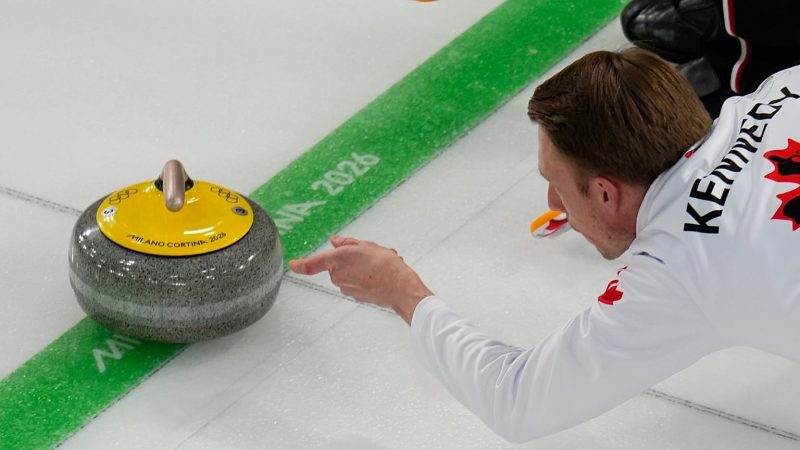
At the 2026 Winter Olympics in Milano-Cortina, the sport of curling finds itself embroiled in controversy following accusations of cheating involving a rule known as "double-touching." This incident, which erupted on February 17, has put the sport's culture of trust and self-officiating under unprecedented scrutiny.
Accusations Ignite a Heated Debate
The scandal unfolded when Oskar Eriksson of Sweden publicly accused Canada's Marc Kennedy of violating the double-touching rule during a crucial match. According to the rules, double-touching occurs when a player inadvertently touches the stone again after it's been released, a situation that can arise in the high-stakes environment of Olympic competition. Kennedy's fiery response, filled with expletives, quickly drew attention to curling, a sport that seldom makes headlines outside the Olympic season.
In a swift reaction to the accusations, the World Curling Federation announced plans to increase oversight by deploying additional officials to monitor matches closely. This decision came despite the fact that the Olympic men's and women's round-robin competition was already in full swing, raising eyebrows among players and coaches alike.
Second Incident Raises Eyebrows
The controversy escalated further less than 24 hours later when officials accused the Canadian women's team, led by Rachel Homan, of committing the same double-touching violation. This second incident added fuel to an already heated atmosphere, prompting discussions not only about the integrity of the athletes but also about the reliability of the rules themselves.
Many athletes weighed in, arguing that not every instance of double-touching should be viewed as an intentional violation. They pointed out that accidental contact with the stone can easily happen in the split second after release, highlighting the fine line between a genuine mistake and intentional rule-breaking. This perspective sparked a debate about the fairness of imposing penalties for what could be innocent mishaps.
Return to Self-Regulation
As tensions mounted and frustration grew among competitors, the World Curling Federation convened a meeting with national federations to reassess its approach. By Sunday afternoon, the governing body reversed its decision to increase oversight, announcing that umpires would not routinely monitor every shot. Instead, they would remain available upon request, a move aimed at restoring the sport's traditional ethos of mutual trust and self-regulation.
Nolan Thiessen, CEO of Curling Canada, emphasized the importance of maintaining the sport's integrity. He stated, "There's a lot of pride in trying to be a sport that kind of officiates ourselves a little bit, so to speak." This sentiment reflects a broader commitment among curlers to preserve the spirit of the game amid rising scrutiny and competition.
Impact on Curling's Image
Despite the scandal, curling has garnered unexpected viral appeal on social media, capturing the attention of audiences beyond its traditional fanbase. Clips of competitive matches, including the recent controversies, have circulated widely, exposing a new generation to the intricacies of the sport. This newfound popularity, however, comes with challenges, as every misstep is magnified under the spotlight of public scrutiny.
As the Olympics continue, the curlers face the delicate task of balancing competitive integrity with the pressures of increased oversight. The ongoing debate surrounding double-touching raises important questions about how sports evolve in response to growing professionalism and global interest.
In the face of these challenges, athletes and officials alike must navigate the complexities of maintaining trust while competing at the highest levels. The outcome of this controversy will likely influence the future of curling governance and its commitment to self-officiating principles. As the games progress, all eyes will be on the ice, watching closely for how the sport responds to this significant test of its values.