
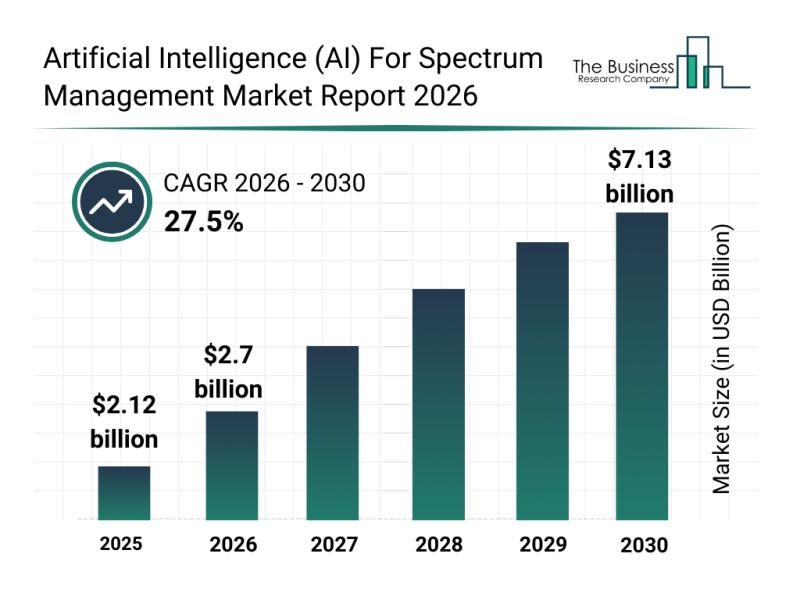
The landscape of wireless communication is undergoing a transformation, driven by the rapid advancement of artificial intelligence (AI) technology. As demands on communication networks continue to surge, the AI-driven spectrum management market is expected to experience significant growth. Experts predict that by 2025, the market will reach a valuation of approximately $2.5 billion, reflecting the immense potential AI holds for improving efficiency and performance in managing wireless spectrum.
Market Growth and Key Drivers
The AI market for spectrum management is on an upward trajectory, fueled by an increasing need for efficient use of radio frequencies. The proliferation of mobile devices, the emergence of 5G, and the Internet of Things (IoT) are key factors driving this demand. With over 25 billion connected devices projected by 2030, the necessity for advanced spectrum management solutions has never been more critical.
According to recent studies, the global AI for spectrum management market is anticipated to grow at a compound annual growth rate (CAGR) of 20% from 2020 to 2025. This remarkable growth is expected to result in a market value of around $2.5 billion by the end of the forecast period. Major companies, including IBM, Qualcomm, and Cisco, are investing heavily in AI technologies to enhance spectrum allocation and optimize wireless communication.
Technological Innovations Transforming Spectrum Management
AI technologies are bringing unprecedented innovations to spectrum management, moving beyond traditional methods that often failed to address the complexities of modern communication networks. Machine learning algorithms, for instance, can analyze vast amounts of data in real time, enabling network operators to make informed decisions about spectrum allocation. By predicting traffic patterns and user behavior, AI can optimize the use of available frequencies, thereby reducing congestion and improving overall network performance.
Moreover, technologies such as cognitive radio, powered by AI, are enhancing spectrum sensing and dynamic frequency allocation. These advancements allow for more efficient use of available spectrum, enabling networks to adapt in real-time to fluctuations in demand. This is particularly vital in urban areas where the density of devices is highest, making efficient spectrum management essential.
Major Players and Strategic Developments
As the AI for spectrum management market expands, several key players are emerging as leaders in the space. IBM has been at the forefront, leveraging its Watson AI platform to develop solutions that enhance spectrum management capabilities. Similarly, Qualcomm is focusing on integrating AI into its chipsets to facilitate smarter spectrum allocation in mobile devices.
In addition, Cisco has launched several initiatives aimed at utilizing AI for optimizing wireless communication. Their AI-driven network management tools help operators better understand and manage their spectrum resources. As competition intensifies, partnerships and collaborations between tech companies and telecommunications providers are likely to increase. Such alliances can drive further innovation, helping to accelerate the deployment of AI technologies in spectrum management.
Future Outlook for AI in Spectrum Management
Looking ahead, the future of AI in spectrum management appears promising. With the ongoing rollout of 5G networks and the expansion of IoT devices, the demand for intelligent spectrum management solutions will continue to grow. Industry experts believe that the integration of AI will become a standard practice in managing wireless spectrum, making networks more adaptive and responsive.
As regulatory bodies also begin to recognize the potential of AI, we can expect to see policies that support the adoption of these technologies. This shift will not only enhance the efficiency of spectrum use but also contribute to more reliable communication services for consumers and businesses alike.
In summary, the AI market for spectrum management is set for substantial growth, with major companies investing in innovative solutions that promise to improve the efficiency and performance of wireless networks. As technology continues to advance, the integration of AI will redefine how spectrum is managed, paving the way for a more connected and efficient future.